






Mix and match bundles give customers the freedom to build their own product combinations while still following rules set by the merchant. When done well, they can increase average order value, improve product discovery, and create a more personalized shopping experience.
In this guide, you'll learn the most common types of custom product bundles, practical examples, and best practices for pricing, setup, and performance measurement.
1. Understanding mix and match bundles
1.1 What are mix and match bundles?
Pick and mix bundles are bundle strategies that let customers choose their own combination from a selected group of products. Instead of buying a fixed set, shoppers can pick the items they want for their offer.
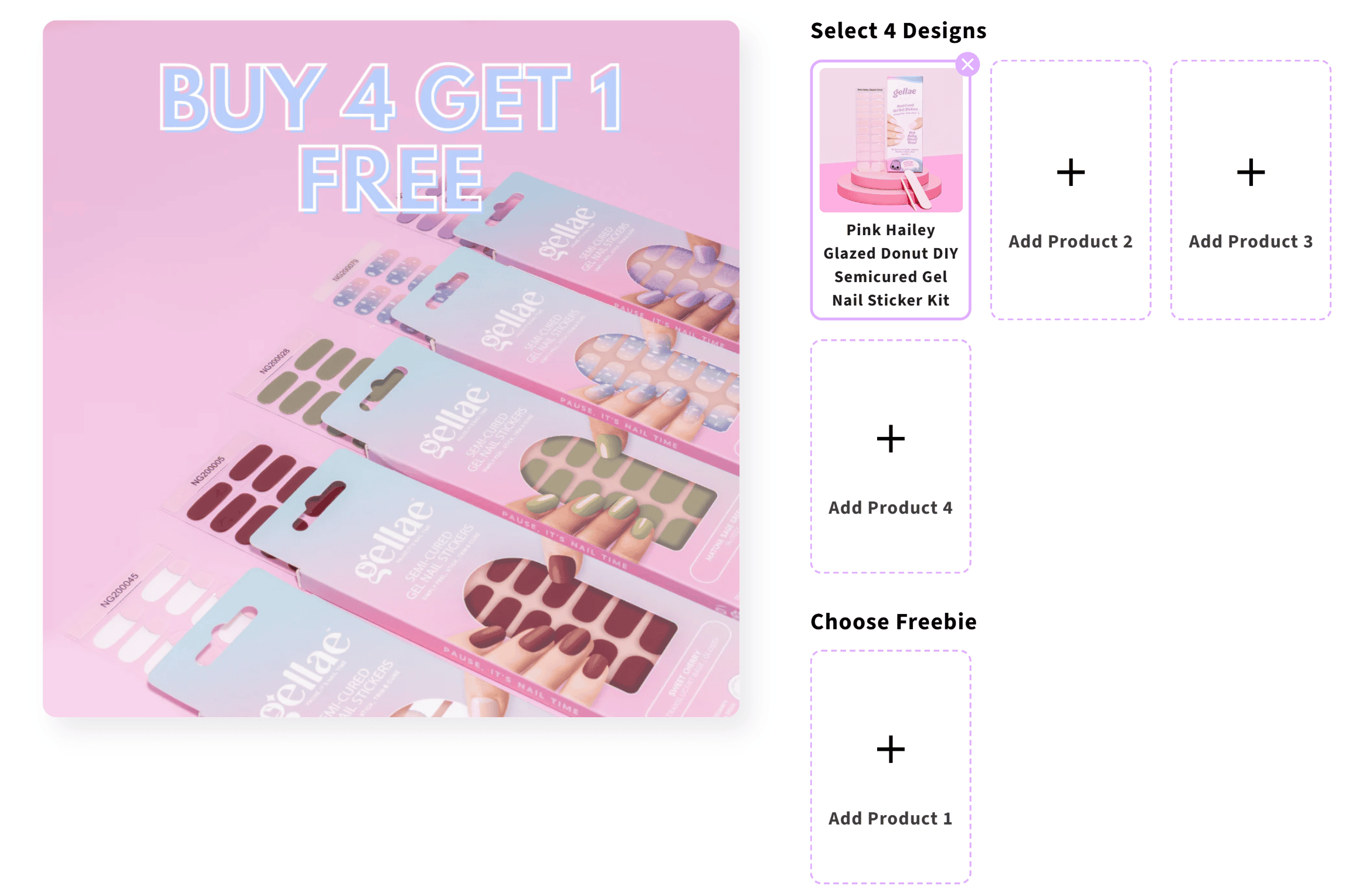
An example of mix and match bundles.
Customers can choose individual products, product variants, or both when applying a mix-n-match deal. Merchants may also set rules around those choices, including the number of items and the product categories.
1.2 Build your own bundles vs Fixed bundles
Create your own bundles matter more when shoppers already know their preferences and want control over what they buy. In contrast, pre-selected sets are often a better fit when the products are designed to work together.
Access this article if you want to compare clearly between fixed and customizable bundling strategies.
2. Common types of mix and match bundles
2.1 Choose any X items from one collection
This is the simplest and most popular kind of mix and match products. Shoppers choose a set number of products from a single collection to unlock a bundling offer. Purchasers know exactly how many items they need to select. Meanwhile, shop owners can control which products are eligible for the offer.
This format is best when eligible products are similar in price, weight, and fulfillment requirements. Common examples include snacks, candles, beauty products, and apparel variants. Do not use it if product values vary significantly within the same collection.
2.2 Build a box from multiple product categories
In build-a-box format, consumers choose items from several categories to complete a bundle. It suits gift boxes, subscription boxes, care packages, wellness kits where variety is part of the appeal. The merchant defines the structure so buyers can easily discover complementary products.
Keep the process simple. Too many categories or selection steps can make the offer complicated and increase abandonment. In the jam study, shoppers presented with 24 jam varieties had only a 3% purchase rate, compared to 30% when the same shoppers were shown just 6 varieties.
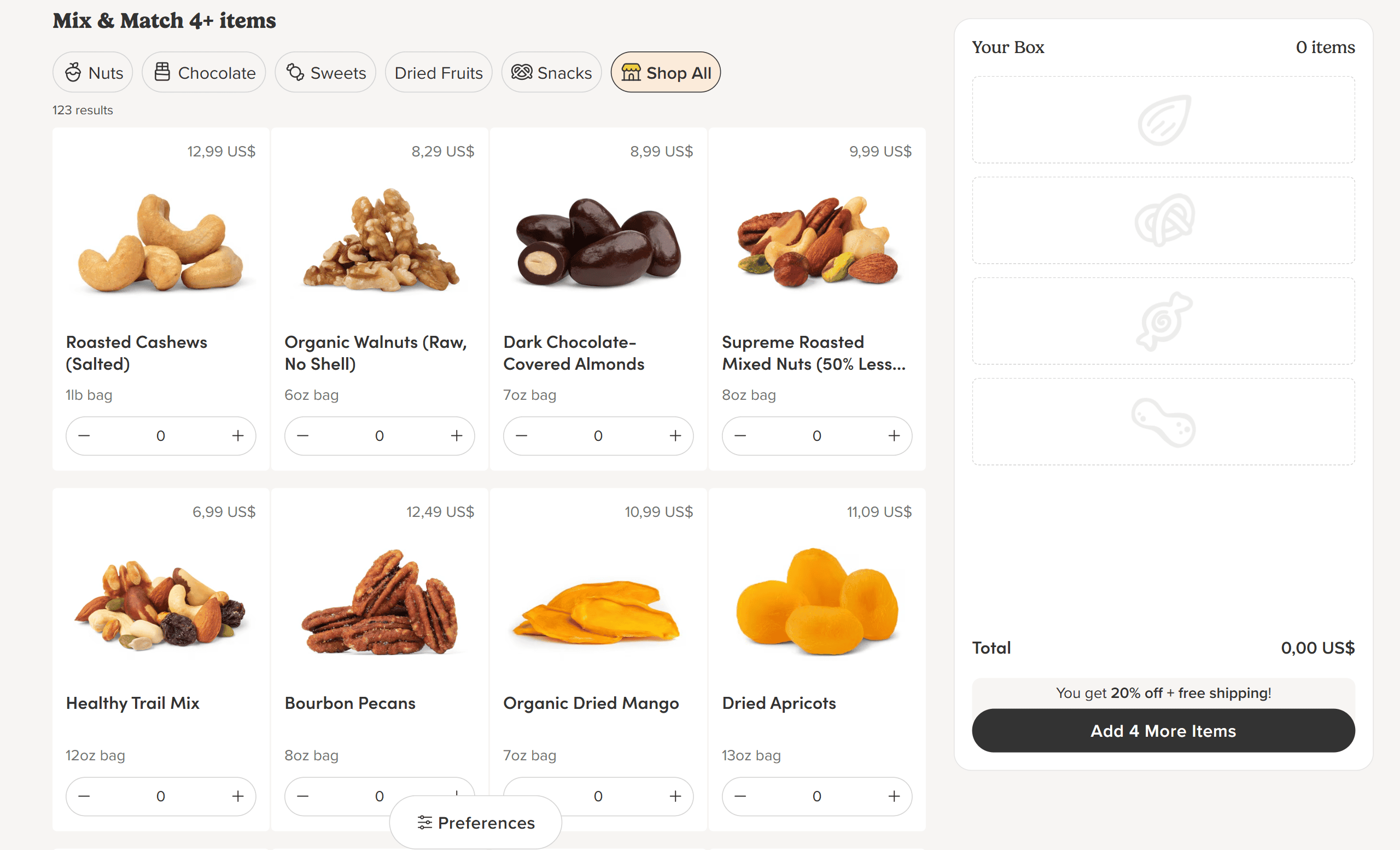
Build your snack box from 5 different categories.
2.3 Customize the bundle with product variants
Customers choose different versions of the same product rather than different products. They may select sizes, colors, flavors and scents to create their preferred combination.
The main challenge is inventory management. Each variant must be connected to the correct SKU to ensure stock levels remain accurate.
2.4 Create subscription or gift bundles
Some stores extend multi-item offers into subscription boxes or personalized gifts. Buyers can build a recurring order, create a seasonal gift box for a specific recipient.
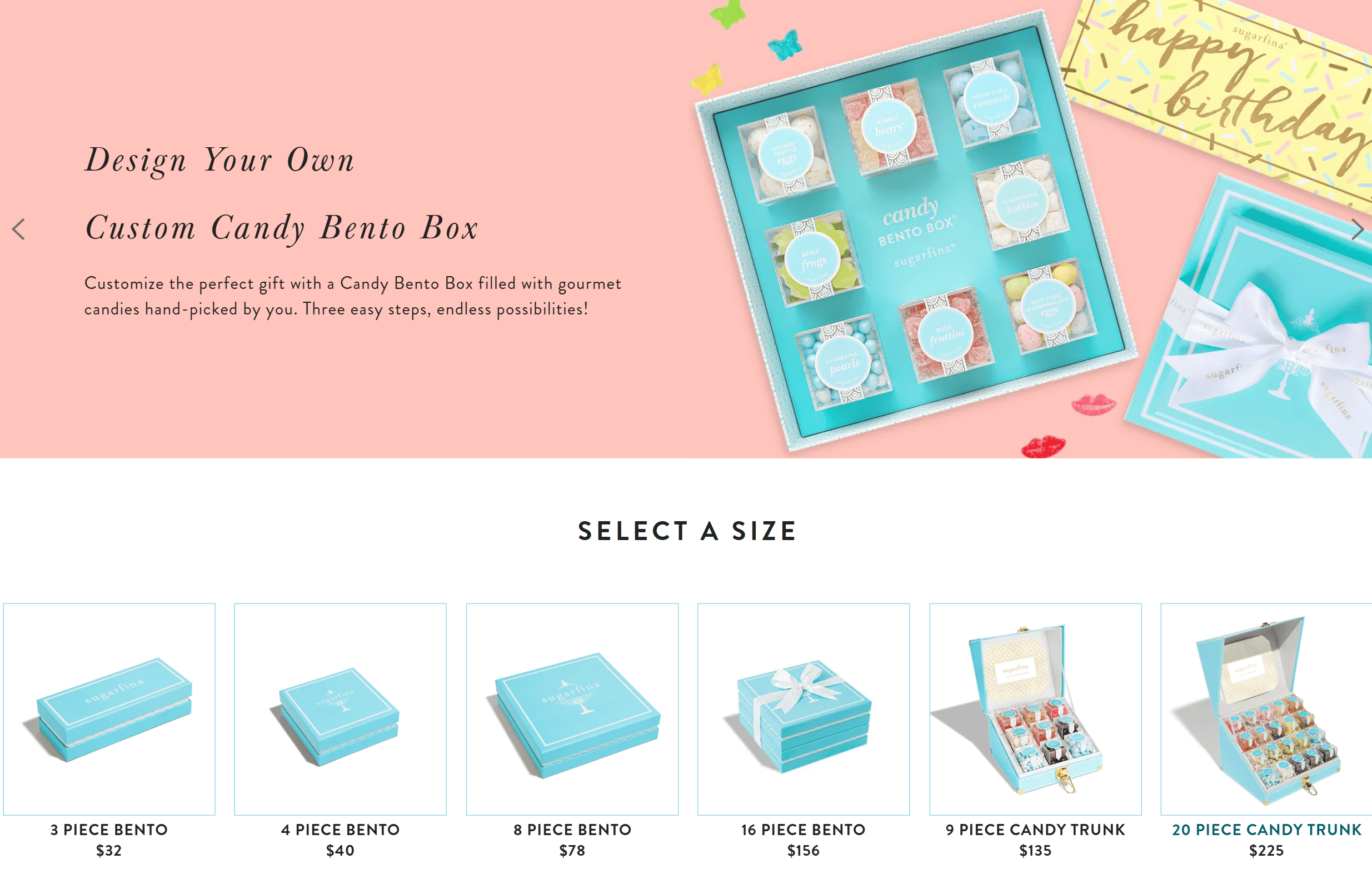
Design a candy gift box for special occasions.
However, these product bundles are often more complex to manage than standard pick and mix discounts. Subscription plans require recurring billing and account management. Gift sets usually involve gift messages, special packaging, and delivery scheduling. For many shops, a simple choose your own combination is a better starting point before expanding into subscription or gift experiences.
3. Best products for mix and match bundles
The strongest build your own bundles usually involve products buyers want to personalize, compare, or repurchase. Here are the most common categories:
4. How to price a pick and mix deal without hurting margins
Most mix-n-match discounts use one of these pricing approaches:
No matter which model you choose, customers should be able to understand the savings immediately. If they need to calculate the benefit themselves, the offer will often feel weaker than it actually is.
However, pricing alone does not protect margins. The most profitable bundling builders also rely on clear qualification rules.
- Set minimum quantities high enough to justify the incentive.
- Use maximum quantities when unlimited selection could create margin or inventory issues.
- Exclude products that are low-margin, oversized, low-stock, personalized, or already heavily discounted if they do not fit the bundling economics.
- Decide whether buyers can select duplicate items.
- Allow duplicates for replenishment products such as snacks, beverages, supplements, and consumables.
- Limit it for sample packs, discovery boxes, and curated assortments where variety is part of the value proposition.
5. How to design a bundle builder that shoppers actually complete
5.1 Make the offer rules easy to understand
Customers should never have to guess how the offer works. Consider:
- Express all eligible products in one place whenever possible.
- Explain the rules near the selection area: quantity requirements, exclusions, or category restrictions.
- Show the expected discount or savings before they reach the cart.
5.2 Use progress indicators for minimum and maximum item counts
Progress indicators are especially useful for choose-any-X format and build-a-box experience. They present how close buyers are to completing the bundle. A simple message like "4 of 6 selected" removes uncertainty and motivates shoppers to move forward. If there is a minimum or maximum number of items, those limits should remain visible throughout the process.
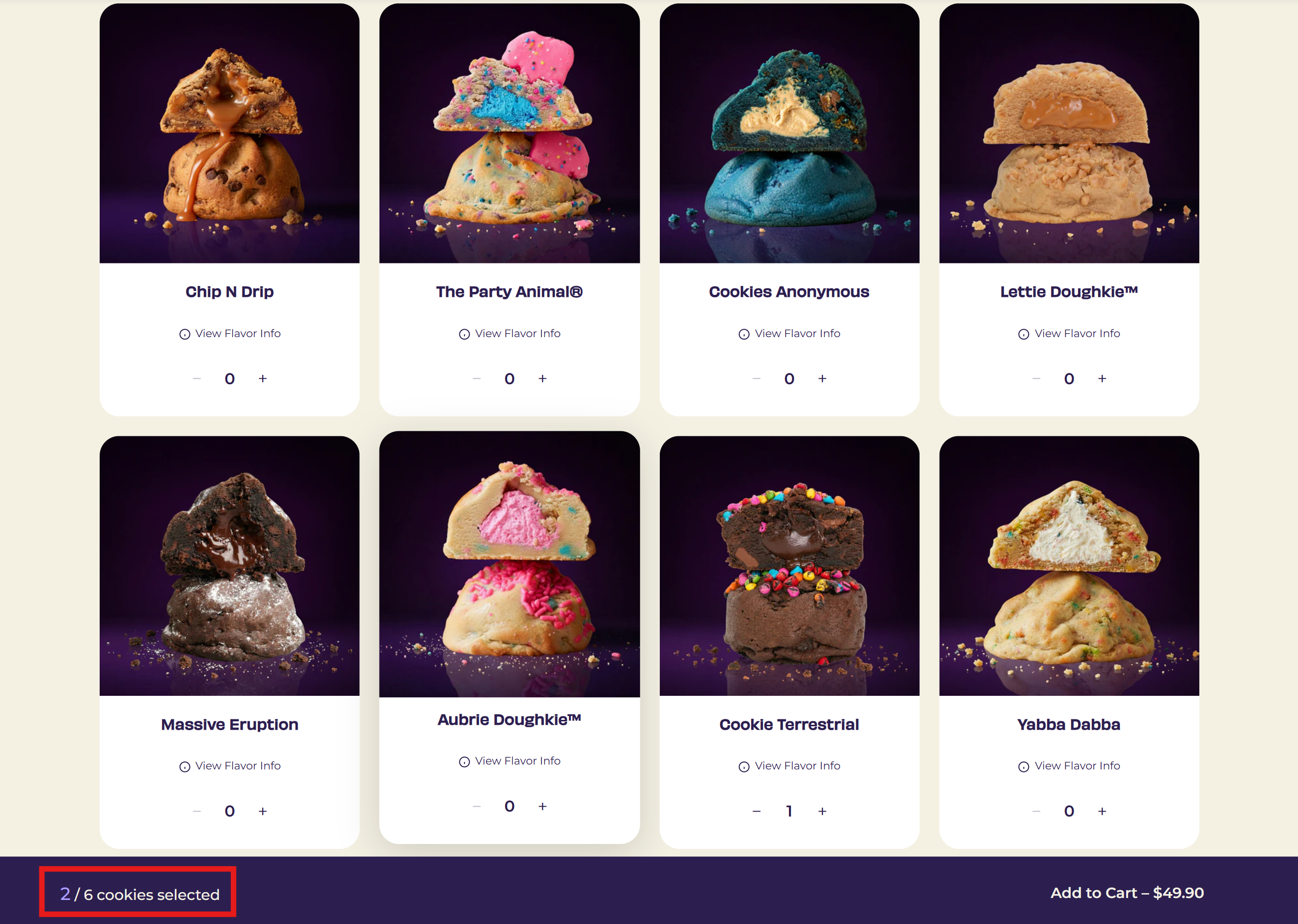
Progress indicators show clearly how many you have selected.
5.3 Make variant selection and mobile browsing easy
Purchasers do not have to check sizes, colors, quantities and availability on multiple product pages. Variant selection should happen inside the bundle builder.
Mobile devices now generate roughly 59% of global ecommerce revenue and drive 75-78% of all ecommerce traffic. On mobile, the limitation is screen space. Keep the interface focused on the information customers need to make a decision. Too many options, badges, and lengthy descriptions tend to be more complicated than needed.
5.4 Apply discounts automatically at cart or checkout
A shopper may abandon the order if a code fails to qualify or is forgotten. When conditions are met, the price reduction should apply automatically and be reflected in cart or checkout.
Before launch, shop owners should decide whether bundle deals can combine with other promotions. Clear discount rules prevent customer confusion and protect margins at the same time.
6. What to check before launching mix and match bundles on Shopify?
6.1 Choose the right setup
Start by deciding how the bundle will be built and managed for your Shopify online stores.
- Set a fixed bundle as a regular item.
- Install a dedicated bundle app when you need customer-selected products, quantity rules, and a guided bundle-building experience. For most Shopify merchants, using third-party apps is usually the fastest method.
- Consider custom code only for complex rules, unusual fulfillment requirements, or integration needs that app settings cannot support.
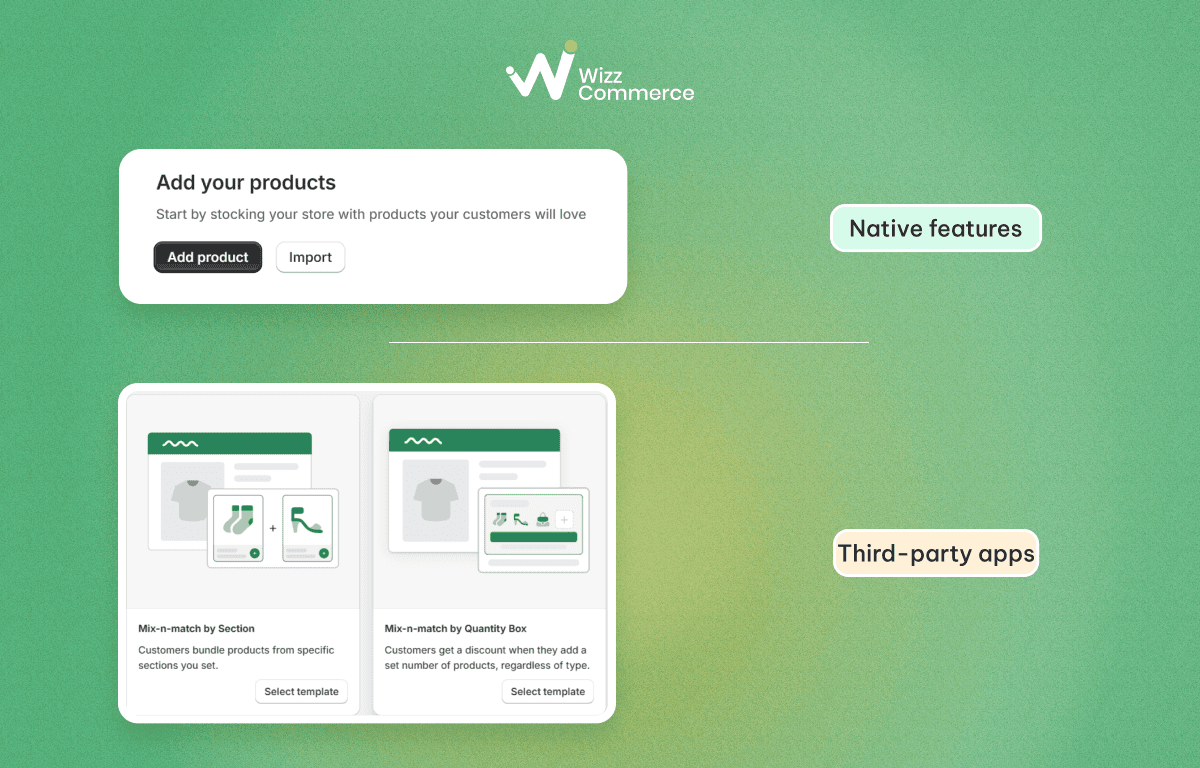
Shopify built-in features compared to Shopify apps.
Review that the chosen solution operates correctly with your theme, checkout flow, subscriptions, and discount behavior.
6.2 Verify inventory, fulfillment and returns
Inventory should update at the product or variant level, not just at the bundle level. If a shopper picks multiple variants within the same deal, each variant should be deducted from the correct SKU.
Fulfillment teams should be able to see exactly what the consumer selected. Packing slips, order details, and warehouse workflows should list the exact bundling components and quantities.
Returns deserve particular attention here, because the numbers involved are significant. 82% of consumers now say free returns are an important factor in their purchase decision. Moreover, 71% of shoppers say they're less likely to buy from a retailer again after a bad returns experience. Define your returns policy in advance:
- Whether customers can return individual items
- Whether replacements are available for damaged products
- How bundle refunds will be handled
6.3 Testing discount rules, exclusions, and edge cases
Testing should cover more than the ideal customer journey. The buyer may pick too few, enough, or more than the required number of items. Some carts may contain a mix of eligible and ineligible products. Discounts should behave as intended after coupon usage, inventory changes, and cart edits.
Finding the issues before launch is much easier than fixing them once traffic starts reaching the offer.
7. How to measure performance of mix and match offers
7.1 Track the metrics that matter
Looking at a single metric rarely tells the full story. To know the true impact of the offer, Shopify merchants need to focus on:
- Average order value (AOV) to measure basket size.
- Conversion rate to understand whether the offer encourages or discourages purchases.
- Attach rate to see how often shoppers complete the bundle after viewing it.
When analyzing results, compare bundling performance across product categories and pricing models. An offer that drives revenue may still hurt margins if shipping and fulfillment become too costly.
7.2 Use customer behavior to improve product mix and bundle rules
Purchaser choices can reveal what is working and what needs adjustment. Pay attention to patterns such as:
- Frequently selected product combinations.
- Items that repeatedly sell out within bundles.
- Abandonment during the bundle-building process.
- Low-margin product pairings that reduce profitability.
Use these insights to refine product eligibility, quantity requirements, pricing rules, and exclusions over time.
Final thoughts
Mix and match bundles are most effective when they balance customer choice with business goals. The right products, pricing model, and bundle rules can increase flexibility for shoppers while keeping operations manageable.
Test, measure, and improve over time. The best bunding strategies are usually the easiest to understand and complete.
FAQs
1. How do create your own bundles work in an online store?
A store usually shows eligible products in a bundle builder or collection page. Customers select the required number of items, such as any 3 shirts or any 6 snacks, and the discount is applied once the offer rules are met.
2. What is the difference between a custom product bundle and a regular product bundle?
A regular product bundle usually contains fixed items chosen by the seller. A multi-item bundle gives customers flexibility to choose which products, flavors, sizes, colors, or variants they want inside the bundle.
3. What products work best for pick and mix deals?
They work especially well for products with variety, repeat-purchase potential, or gift appeal, such as clothing, skincare, makeup, snacks, beverages, candles, supplements, pet products, and subscription boxes.