






TL;DR
Choose FBT for flexible, optional cross-sell recommendations, or bundles to provide curated, complete solutions with clear pricing advantages. The hybrid approach is usually the strongest strategy to optimize conversions and preserve profitability.Frequently bought together vs bundles comes down to how much control you want over the offer. FBT recommends optional items alongside the main product, while bundles package multiple products into a more structured offer.
The right option depends on your goals. FBT is often used to boost add-on purchases, whereas bundles help simplify buying decisions. This guide breaks down the key differences, when to use each strategy, and how to decide which approach fits your store.
1. Understanding frequently bought together vs bundles
1.1 What is Frequently Bought Together?
Frequently bought together (FBT) is a cross-sell strategy that recommends complementary products alongside the item a customer is currently viewing. The recommendations may come from co-purchase behavior, or be manually chosen by merchants.
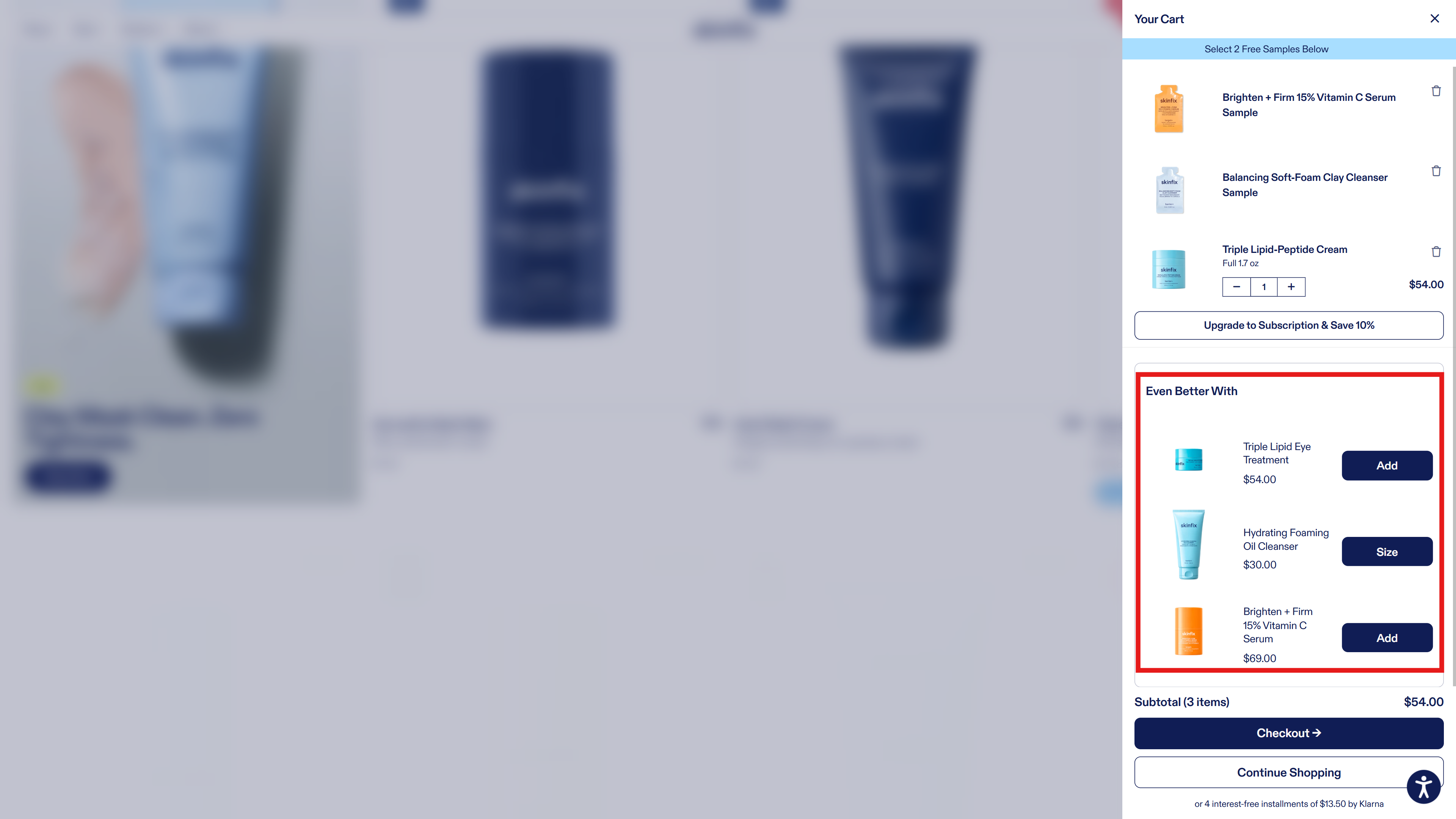
An example of Frequently Bought Together syle.
Some tools also support discounts, such as percentage discounts, fixed discounts, free gifts, or free shipping. These incentives can strengthen suggestions, but they are not a required part of the FBT model.
1.2 What are bundles?
A product bundle combines multiple products into one single offer, often at a lower total price than buying each item separately. Unlike cross-sell recommendations, bundles are intentionally designed by the merchant. The products, pricing, and overall offer are usually defined in advance.
Two of the most popular bundling formats are:
- Fixed bundles - Customers buy a premade set of related items sold together as a package.
- Mix and match bundles - Shoppers build their own bundle by selecting from a group of eligible products.
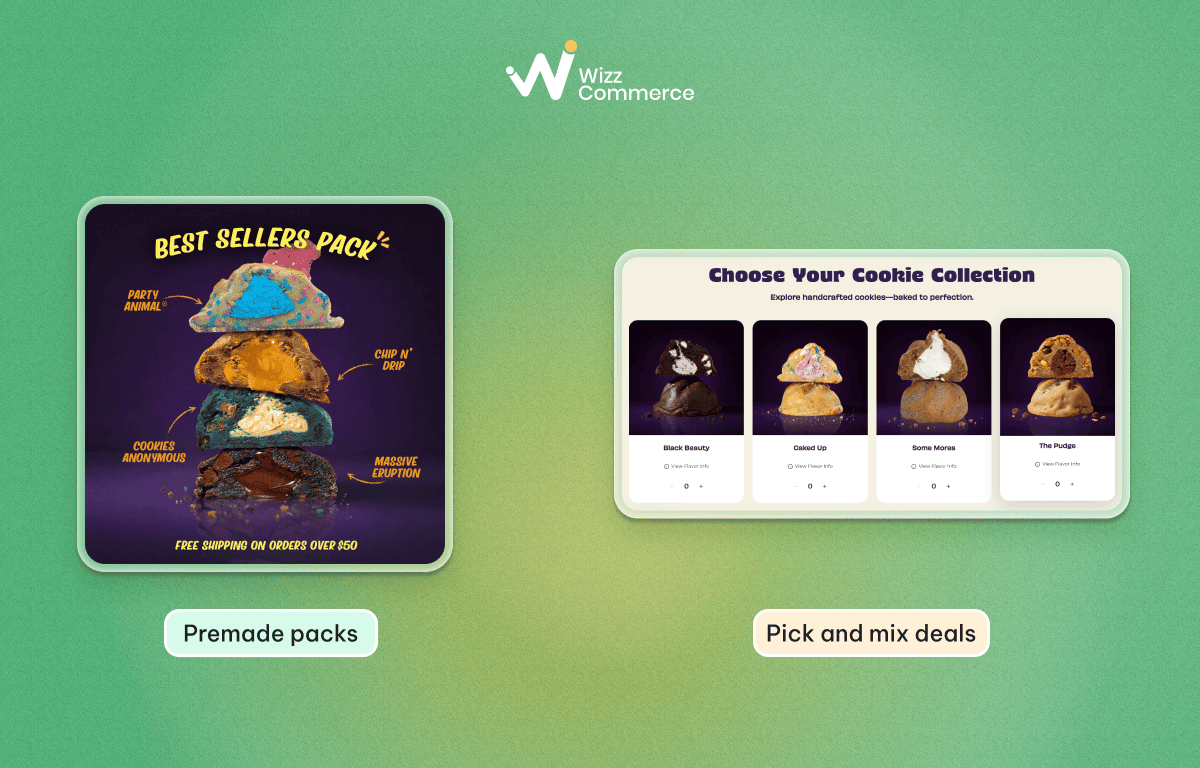
Premade packs vs pick and mix deals.
1.3 Key differences between FBT and bundles
Both FBT and bundle offers encourage shoppers to buy more, but they shape the buying experience differently. Here's how they compare:
- If shoppers can ignore the extra products and still complete the order, you are likely using a related item widget.
- If the products are presented as a planned multi-item offer, you are probably looking at a bundle discount.
2. When frequently bought together makes sense?
2.1 The add-on is helpful but optional
Barilliance found that related item suggestions account for 31% of eCommerce site revenues. FBT works best when customers can buy the main product alone without creating a bad experience. Think about replacement filters, cables, care products, refills, batteries, or compatible accessories. These items may be useful, but they should not make the core purchase feel incomplete.
- Rule of thumb: If the add-on improves convenience but is not essential to the core value, apply FBT rather than a fixed set.
2.2 Customers need flexibility
Bundling strategies ask buyers to accept a predefined set, often with a shared discount structure. Suggested add-ons give them more control. They can add one item, several items, or none at all.
This matters when purchasers have different needs, budgets, or ownership histories. Deloitte found that 80% of consumers surveyed prefer brands that offer personalized experiences and reported spending 50% more with such brands. Categories that can benefit from this model include apparel, beauty, electronics, hobby supplies, and consumables.
2.3 Customer behavior can reveal better pairings over time
FBT can also help uncover stronger cross-sell opportunities before you invest in a formal bundle. Many online stores use product recommendations based on past purchase combinations, although manual setup is common as well. Watching which items shopper frequently add together can reveal future bundling opportunities.
- One caution: Avoid relying on automated product matches when sales data is limited, seasonal, or heavily influenced by promotions.
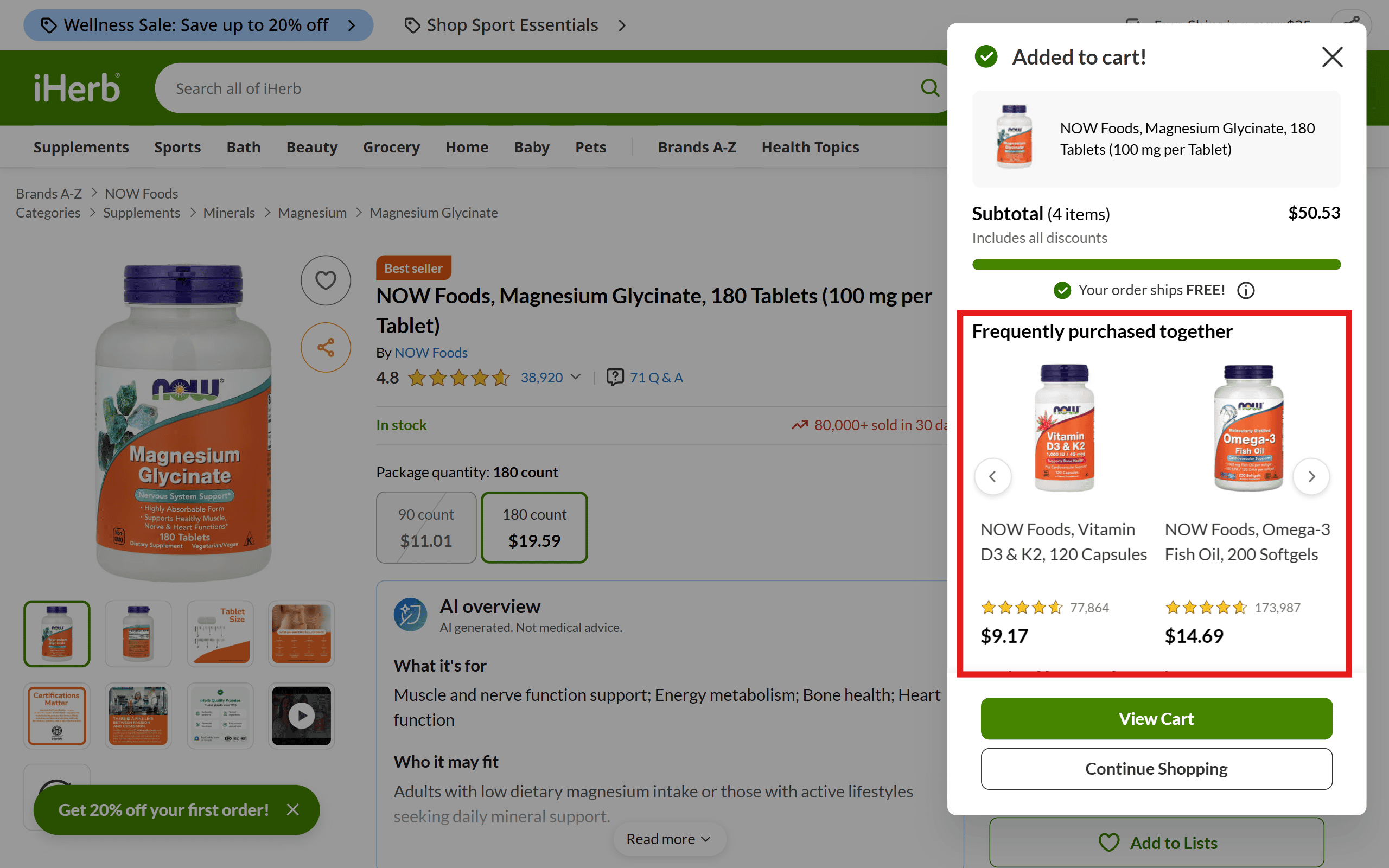
Shoppers can freely decide to add optional extra items or not.
3. When bundling products are the better choice?
3.1 The products solve one complete problem
A bundle offer performs well when the items feel incomplete without each other. Common examples include starter kits, skincare routines, repair sets, device setup packages, or gift boxes. Customers are not asking, “Do I also need this?” They are asking, “Does this give me everything I need?”
3.2 You want to simplify the buying decision
Bundling is useful when too many choices slow the shopper down. Instead of making someone compare every compatible item, merchants present a ready-made option for them. This can help first-time buyers, gift shoppers, and customers who are unfamiliar with the category.
☕For example: A beginner coffee kit could include beans, filters, and a grinder. The value comes from not only the products themselves but also the confidence that the set works together.
3.3 The offer needs a clear price advantage
Bundle pricing is easier to understand because shoppers just compare a single offer. While a discount is not required, a clear price advantage often makes the bundle more compelling.
Before discounting, ask:
- Will the offer generate additional sales?
- Or are you simply reducing prices on purchases that would have happened anyway?
3.4 You need more control over the offer
Bundles give merchants full control over what is included. Choose bundle strategies when the exact combination matters: inventory you want to move together, curated seasonal promotions, brand-approved regimens, or compliance-sensitive kits.
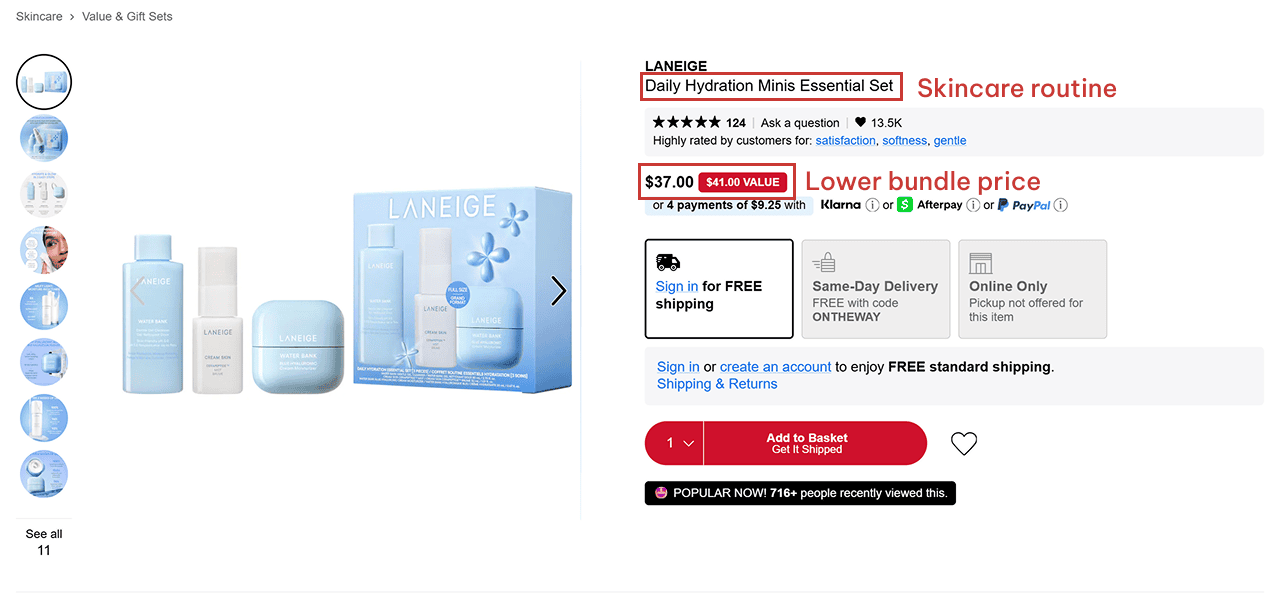
A premade skincare set with a lower total price.
4. How product recommendations and bundles affect operational management?
Choosing between FBT and product bundles affects more than the storefront experience. It also impacts pricing, margins, inventory management, and fulfillment.
Add-on suggestions allow shoppers to decide whether they want the recommended products. Because the suggestions are optional, shop owners can introduce complementary items more without changing the price of the hero product.
Product bundles take a more structured approach. A single offer often creates a clearer value proposition, especially when it includes a price advantage.
- Keep in mind: Frequently bought together can still include discounts, but discounts are a feature, not a requirement.
4.2 Margins: Balance value and profitability
Bundle discounts can make an offer more attractive, particularly when customers are likely to need every item in the set. The downside is that discounts can quietly erode margins. You need to consider:
- Will the package increase conversion or total units sold?
- Will it help move inventory?
- Does it support a specific merchandising goal?
If the add-on is useful but not essential, FBT often works well without any discount at all.
- Important note: Focus on your margin floor first, then evaluate the impact on AOV and conversion.
4.3 Inventory: Flexibility vs. control
FBT usually keeps inventory simple because each product remains an independent SKU. If an add-on goes out of stock, you can remove or replace the suggestion.
Bundled products require a more deliberate inventory model:
- Virtual bundles: inventory is deducted from separate component SKUs.
- Single-SKU bundles: is managed as its own stock item.
Virtual sets are more flexible, while single-SKU kits can be easier to merchandise but harder to forecast accurately.
4.4 Fulfillment: Simplicity vs. operational complexity
FBT orders usually flow through fulfillment like any other multi-item purchase. Bundle offers may need special pick lists, custom packaging, barcode rules, substitution policies, and return handling. If your warehouse cannot reliably identify, pack, or process bundling orders, FBT is often the safer starting point.
5. How should you decide between cross-sell recommendations, bundles, or using both?
If you're unsure whether to implement bought together products or bundling products, here's a simple framework to guide the choice:
FBT tends to be closest to discovery and comparison: product pages, cart upsells, and related product sections. Bundles belong where the shop wants to simplify the decision: collection pages, landing pages, gift guides, starter-kit pages, and promotional campaigns.
In many cases, the strongest strategy is to use both:
- Apply FBT to suggest complementary products on product pages and in the cart.
- Track which combinations perform consistently over time.
- Promote proven pairings into dedicated sets.
- Continue using both tactics where they serve different customer needs.
Want to learn how to turn add-on suggestions into a thorough bundling strategy? Please read this guide.
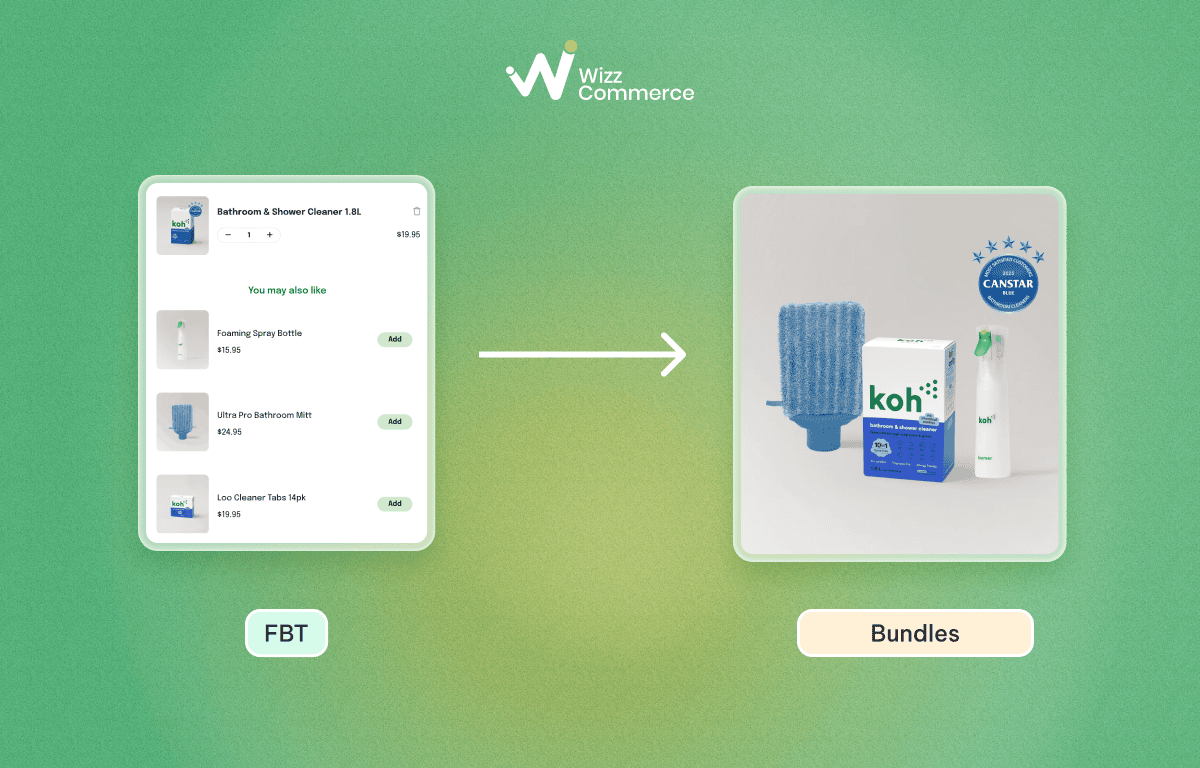
Build a starter kit based on frequently bought together patterns.
6. How to measure the success of recommended add-ons or bundles for your Shopify stores
6.1 Key metrics to track
6.2 Testing ideas
A simple A/B test can reveal whether the offer is helping or hurting:
- No offer vs FBT sections
- Single product vs bundle
- Manual recommendations vs automated recommendations
- Bundle pricing vs individual product pricing
When possible, keep the same traffic source, product page, and testing period to reduce noise in the results.
6.3 Common mistakes to avoid
- Assuming all bundle sales are incremental revenue.
- Focusing only on AOV while ignoring margin and conversion.
- Pairing products that are weakly related to the main purchase.
- Forcing a bundle before customer demand is proven.
- Overlooking fulfillment, returns, and operational complexity.
Conclusion
There is no universal winner in frequently bought together vs bundles. FBT is the better fit if shoppers should be free to decide what to add. A bundle offer tends to be stronger if the items bring a complete solution.
Many stores take advantage of using both. Know customer behavior first, then measure performance and operational impact. The strategy that creates the best customer experience while supporting profitable growth is the one worth scaling.
FAQs
1. What is the difference between Shopify frequently bought together and bundles?
Frequently bought together usually shows suggested items that purchasers can add individually, often based on purchase behavior. Bundles package multiple products as one offer, usually with a shared pricing or a discount.
2. When should a Shopify store use FBT or bundle offers?
Use FBT when buyers may want flexible add-ons without committing to a curated set. Bundle offers are better when products naturally belong together as a full solution.
3. Do related product offers need a discount?
No. FBT can work without any discount because it is mainly a convenience and discovery tool. While some merchants apply incentives to increase attachment, relevant product recommendations are often enough to drive results.