






TL;DR
Many Shopify discount campaigns fail because they focus on increasing sales volume instead of protecting profit. Common problems include damaging price perception with constant percentage discounts, lowering margins without increasing average order value, targeting the wrong customers, and measuring success by revenue rather than profit.To improve results, merchants should use threshold-based offers, customer segmentation, bundles, BOGO deals, free gifts, and tiered incentives that encourage larger carts.
The problem is not discounting itself. The problem is running promotions without understanding what they actually cost. Margin erosion, price conditioning, and poor campaign revenue measurement can turn a busy sales period into a loss.
This article breaks down four common reasons Shopify discounts fail to grow revenue, and shows what to do instead.
1. Understanding Shopify discounts
1.1 What is a Shopify discount?
- Amount off: Takes a fixed amount or a percentage off a product, a collection, or an entire order. Example: $10 off or 25% off sitewide.
- Buy X get Y discount (or BOGO offers): Rewards customers who meet a set purchase requirement. It works as a manual code or applies automatically at checkout when conditions are met.
- Free shipping discount: Removes shipping costs for customers who qualify. You can cap it by excluding rates above a certain price, so high-cost shipping options stay protected.
Discounts are commonly promoted through banners, but they often get overlooked if they fail to catch the eye. Here are 5 reasons why your Shopify discount banners aren't converting.
Discounts can be useful. They can help acquire first-time buyers, clear aging inventory, reward loyal customers, increase checkout conversion, or support seasonal promotions. The problem starts when every promotion is a blanket percentage discount with no connection to margin, AOV, product mix, or customer behavior.
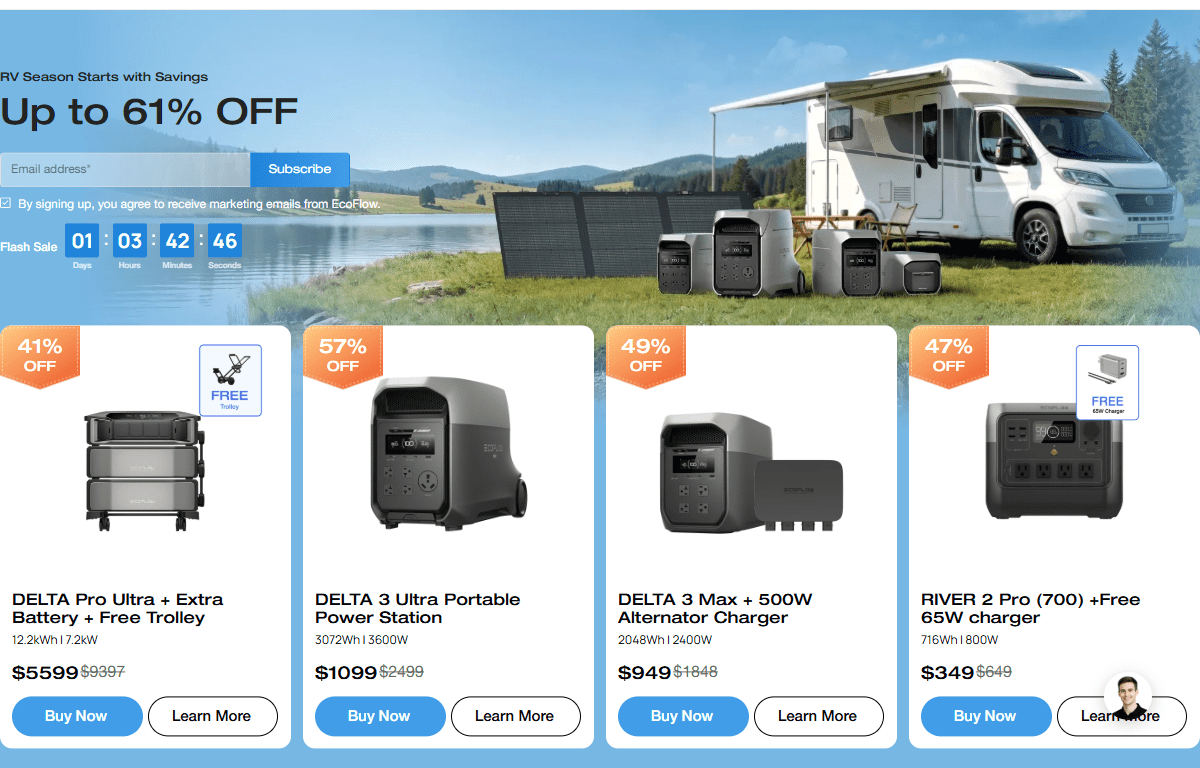
Shopify discount with expiration date example
1.2 How can Shopify discounts hurt store revenue?
Discounts are not free. Every price reduction has a cost, and that cost is not always visible in a sales report.
The most common mistake is measuring a discount campaign by revenue lifted, orders placed, or coupon usage. These numbers can look positive while gross margin quietly fall. A store can run a "successful" promotion and walk away with less money than before it started.
The real damage often comes from decisions that seem harmless in the short term:
- Offering a discount with no clear condition or purchase requirement, which raises cart abandonment
- Running the same promotion so often that price-sensitive shoppers expect it, pushing up the one-time purchase rate
- Applying a blanket percentage off without checking whether the cost of goods sold leaves enough room at your profit threshold
- Measuring results by top-line sales instead of tracking discount impact on profit and margin percentage
2. Reasons why a Shopify discount does not increase revenue (and how to fix)
If you are asking why discounts do not increase revenue, the answer usually sits in one of four areas: price perception, AOV, customer behavior, or measurement. Each problem has a different fix.
2.1 Reason 1: Percentage discounts lower price perception
A Shopify percentage discount is simple and effective in the short term. But used too often, they quietly damage how customers see your brand and your prices.
When a shopper gets 25% off today, that sale price becomes their new reference point. Next month, the full price feels wrong, even if nothing about the product has changed. It reduces purchase frequency among discount-driven customers who begin to wait for the next sale instead of buying at full price. According to one survey, 65% of respondents said they delayed their purchases until specific sales events took place.
Frequent Shopify markdowns send a signal that the product is not worth its original price. This risk is higher for brands built on quality, exclusivity, or premium positioning.
- Set a clear qualifying cart value as a condition before any reward applies
- Replace blanket promo codes with goal-specific offers, for example: a limited-time offer Shopify merchants run on slow-moving inventory works better than a sitewide sale with no condition.
- Replace open offers with loyalty incentives that rewards repeat buyers
- Exclude best sellers, low-margin products, and high-demand items from automatic or public promotions unless there is a clear reason to discount them
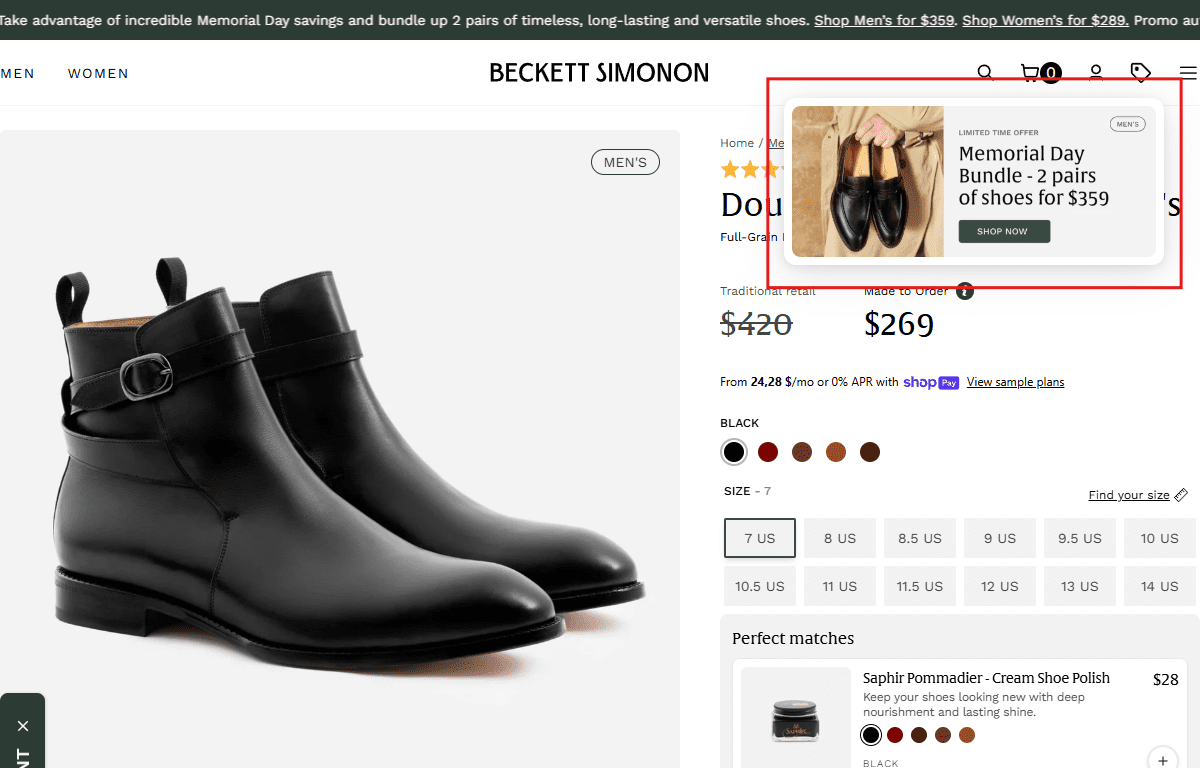
Shopify promotional pricing for a limited time
2.2 Reason 2: Margins drop without a higher average order value
A Shopify discount lowers revenue per order immediately. If the customer's cart does not grow, the store absorbs that loss entirely. This is why many campaigns show more sales but less profit.
Here is a simple discount impact on profit view:
- Set minimum spend thresholds above your current AOV. If AOV is $68, offer a reward at $85 or $90 to push customers to add one more item
- Use mechanics that require cart growth: free gift over a minimum order, tiered savings, upsell and cross-sell tactics, bundle pricing, free shipping thresholds, or Buy X Get Y offers
- Make sure the cart threshold is high enough that the reward does not erase the gross margin Shopify store gained from the larger cart
2.3 Reason 3: Shopify sale offers reach the wrong customers at the wrong time
A flat Shopify price reduction often captures customers who were already ready to buy. The store gives away margin without changing product discovery, unit count, or repeat behavior. The result is high redemption from existing buyers and little incremental revenue. This is one of the most common reasons why your discount doesn't motivate buyers.
The root cause is treating all customers the same. New visitors, returning buyers, D2C shoppers, VIP customers, and price-sensitive shoppers have different motivations. Sending everyone the same offer misses that difference.
- Segment customers using customer tags/segment name, purchase frequency, order volume, or product interest before setting eligibility
- Give first-time buyers a welcome offer tied to a minimum spend threshold or when they subscribe to the store's newsletter
- Reward VIP customers with early access or exclusive bundles rather than public codes
- Use seasonal promotions Shopify brands run for inventory transitions or slower sales periods instead of constant discounts
- Reserve percentage discounts for lapsed customers where re-engagement is the specific goal
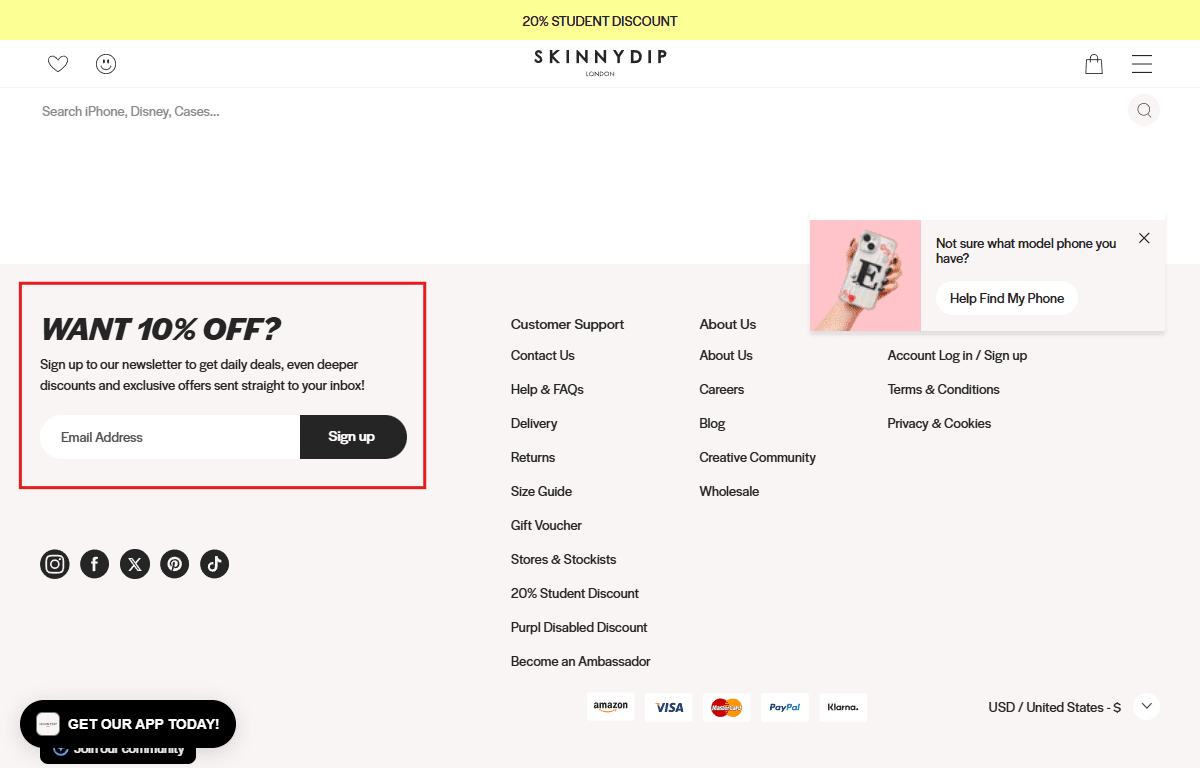
Shopify coupon for subcribers
2.4 Reason 4: Discount campaigns are measured by sales instead of profit
Shopify discount analytics often make campaigns appear successful even when the economy is weak. Strong discount code performance, rising order counts, and a high coupon redemption rate do not account for baseline demand, margin erosion, customer acquisition cost, shipping cost, returns, or repeat purchase quality.
A better campaign report separates sales, revenue, gross profit, and contribution margin. It also compares the campaign cohort against a baseline period or holdout group where possible using A/B testing between a control group and test group.
- Separate gross sales, gross profit, and contribution margin in your campaign reports
- Compare campaign cost and performance against a normal baseline period
- Track five signals per campaign: incremental revenue, AOV change, gross margin per order, redemption source, and 30 to 90-day repeat repeat purchase rate.
- Monitor discount code redemption rate together with customer retention Shopify metrics and customer lifetime value, including retention rate and repeat revenue
3. Smarter alternatives to a basic Shopify discount
3.1 BOGO offers for increasing units per order
BOGO offers work well when the goal is to increase item count, move inventory, introduce product pairings, or encourage replenishment. A Shopify buy X get Y discount can be more strategic than a storewide percentage code because it controls which products qualify and which products are discounted. When shoppers are given the choice between a BOGO promotion and a percentage discount with the same value, they are three times more likely to choose the BOGO offer.
Setting up BOGO as an automatic discount removes friction at checkout application. When customers do not need a code, the completed checkout percentage is generally higher.
For discount campaign planning, BOGO works best on products with healthy margins and low return risk. Track redemption rate alongside upsell revenue and attachment rate to judge whether the offer is changing buying behavior or simply rewarding customers who planned to buy anyway.
3.2 Free gift offers for raising cart value
Free gifts protect perceived value because the main product price does not change. They also give shoppers a clear reason to add more items to the cart. The key is choosing a gift with high perceived value and controlled cost of goods sold.
For Shopify conversion optimization, the threshold amount should sit above your current average order value. If AOV is $72, a gift unlocked at $90 or $95 gives customers a reason to add one more item without feeling forced. This tactic also supports cross-sell by pairing the gift mechanic with a related product suggestion. Pick a gift with high perceived value but low margin percentage, such as a sample, travel size, or low-weight add-on.
For a deeper analysis of how to leverage Shopify BOGO & free gifts, read this article.
3.3 Bundle and tiered incentives for profitable AOV growth
Bundles and tiered incentives guide customers toward larger purchases through structure rather than a simple price cut. A product bundle pairs a main product with accessories, refills, or related items. A tiered offer rewards bigger carts, such as 10% off orders over $100 and 15% off orders over $150, following a tiered discount structure.
The Shopify volume discount versus bundle decision depends on the goal:
- Use volume discounts by quantity tier when the aim is to sell more units of the same product at a lower unit price
- Use bundles when the aim is to introduce related products, increase attachment rate, or help customers buy a complete solution
For these campaigns, apply pricing rules with a clear eligibility condition and discount limits to prevent unintended stacking. You should also track bundle AOV and margin to confirm profitability.
Conclusion
The stronger approach is to design Shopify deal around AOV growth, margin protection, and customer behavior. Use discount codes when attribution matters. Use automatic discounts when reducing friction. Use BOGO offers, free gifts, bundles, free shipping thresholds, and tiered incentives when the goal is to increase basket value.
FAQs (Frequently asked questions)
1. Do Shopify discounts increase revenue?
Shopify discounts can increase short-term sales, but the overall revenue impact becomes positive only when the promotion improves conversion rate, average order value (AOV), or repeat purchase rate enough to offset the loss in gross margin.
2. What is the difference between a discount and an incentive?
A discount directly reduces the price of a product or order. An incentive is designed to encourage higher-value customer behavior, such as adding extra items, reaching a spending threshold, purchasing bundles, or trying related products. Incentives often preserve perceived product value better than constant price reductions.
3. Are BOGO offers better than Shopify promo codes?
BOGO offers can perform better when the objective is to increase units per order, clear inventory, or encourage product pairing. Shopify promo codes are commonly used for attribution, customer acquisition, and retention campaigns. The best option depends on profit margins, inventory goals, product costs, and how the offer influences buying behavior.
4. How can Shopify merchants use free gifts to increase AOV?
Set the free gift threshold above your current average order value and choose a gift with high perceived value but controlled cost. For example, if your current AOV is $70, you could test a free gift threshold at $90. Monitor metrics such as cart value uplift, gift cost, gross margin, redemption rate, and repeat purchase behavior.
5. What should I track after launching a Shopify discount campaign?
Track key ecommerce metrics including average order value (AOV), gross margin, contribution margin, conversion rate, redemption rate, revenue per visitor, incremental revenue, repeat purchase rate, and customer acquisition cost (CAC). Compare discounted orders against baseline store performance to determine whether the campaign generated profitable incremental behavior rather than only more coupon usage.