






TL;DR
Shoppers may ignore Shopify discounts if the product value is unclear, the store lacks trust signals, there is no urgency, the offer targets the wrong audience, or checkout friction cancels the perceived savings. To improve conversions while protecting margins, merchants should strengthen product messaging, build trust, create real urgency, personalize offers, and simplify checkout. Best alternatives to discounts are thresholds, bundles, or value-added incentives.But a discount does not automatically create desire, trust, urgency, or confidence. If a shopper does not understand the product, does not trust the store, dislikes the shipping cost, or feels no reason to buy now, even a strong Shopify discount code may be ignored.
This guide explains what Shopify discounts can do, why discounts alone do not motivate customers to buy, and how to build offers that support purchase intent without damaging profit margins.
1. What is Shopify discount?
1.1 Definition
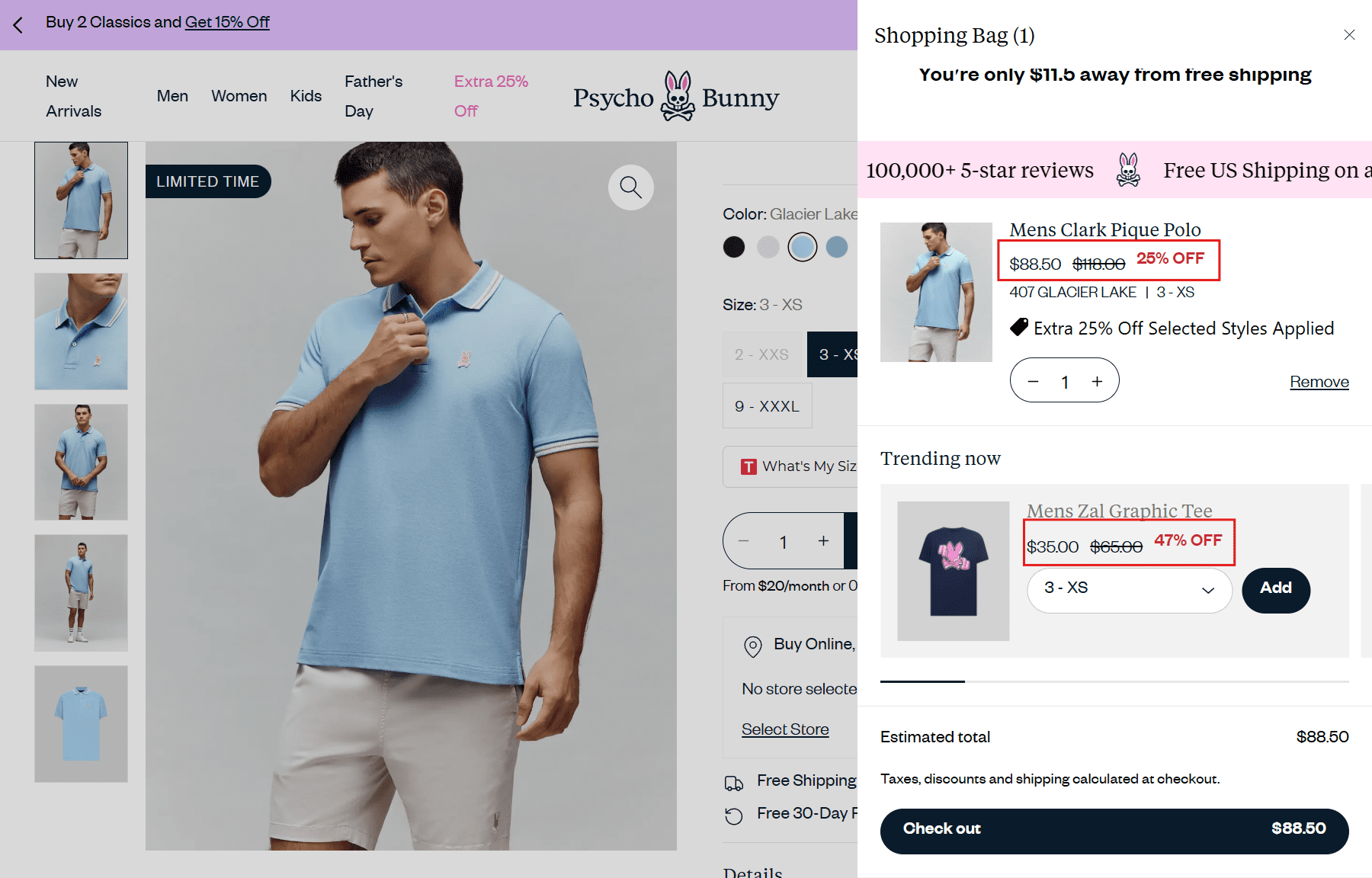
Shopify percentage discount example
1.2 3 types of Shopify discount
Besides these three main discount types, another popular incentive is free gifts. To learn more about how BOGO and free gift promotions work, check out our complete guide.
Both discount codes and automatic discounts can be applied across all these types. Discount codes require manual entry. Automatic discounts apply instantly when conditions are met.
While a Shopify discount can benefit both stores and customers, it does not always create real purchase motivation or increase conversions.
2. Why customers ignore Shopify discounts?
2.1 The product value is not clear enough
An ecommerce discount strategy only works when the customer already sees why the product is worth buying. If they cannot understand what it does, who it is for, or why it matters, a lower price will not help. Poor value perception in ecommerce is one of the most common reasons a promotion fails.
Unclear product value often looks like:
- Generic product descriptions that could apply to any store
- Feature lists with no benefits attached
- No comparison to alternatives or competing products
- Poor images that lack context or real-life use
- No clear reason the product is worth its original price
A recent survey found that 86% of consumers believe business transparency matters more now than ever before. When these signals are missing, a discount can actually backfire. Instead of feeling like a deal, it raises a question: "if this product is good, why is it so cheap?" "why should I buy this?"
- Provide transparent information about the product’s origin, expiration date, materials, ingredients, and other important details. You can also include certification or declaration documents if needed.
- For products with multiple sizes or variations, provide clear details about color, size, and suitable users. You can add tools like sizing calculators that let shoppers enter their information without logging in, making it easier to choose the right product.
- Replace feature lists with benefit-led descriptions. Tell the customer what changes for them after buying.
- Use FAQs to address common doubts.
- Consider bundles or value-added promotions to increase perceived worth without cutting price further.
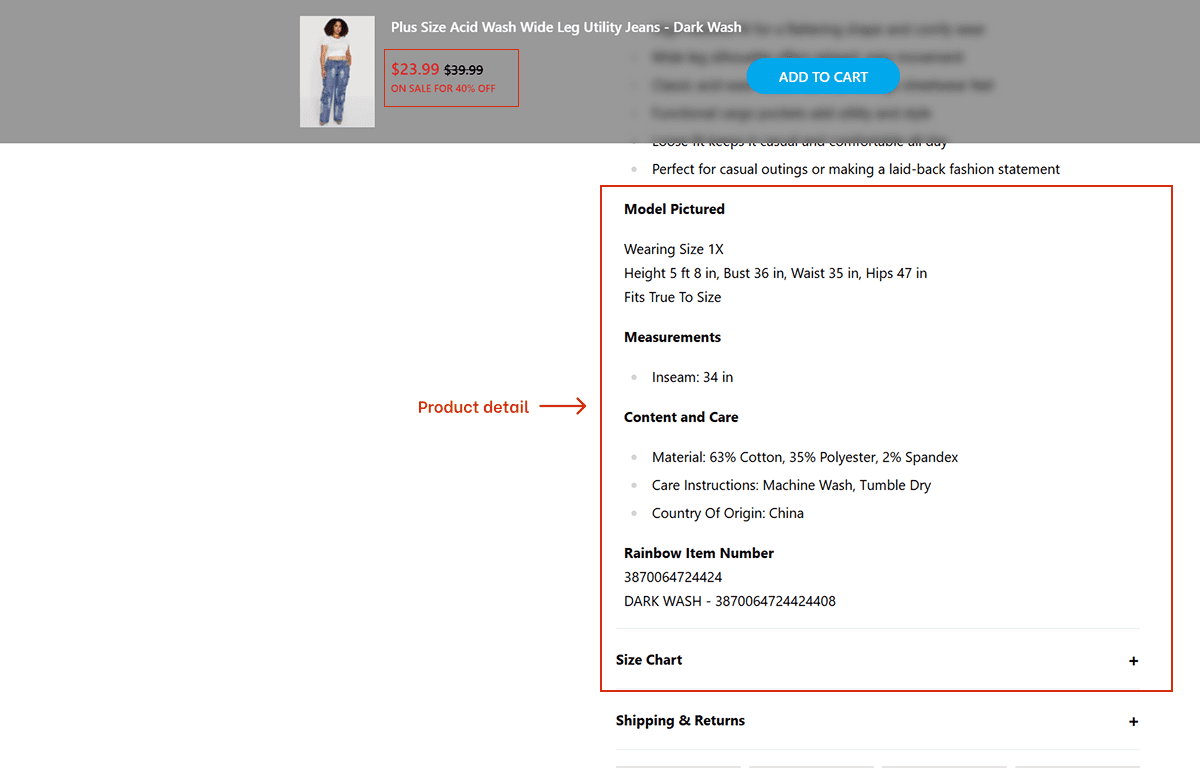
Transparent product detail
2.2 The shopper does not trust the store yet
Ecommerce trust signals is what turns attention into action. A discount can bring a shopper to the page, but weak brand confidence decides whether they leave or buy. For first-time visitors, this is especially true. They have no past experience with the store to rely on.
A store with low trust often has:
- No reviews or customer photos on the product page
- A vague or hard-to-find return policy
- No visible shipping or delivery information
- Missing contact details or brand story
- No secure checkout indicators
Risk reduction starts with making the right information easy to find. Strong product page conversion tactics place trust elements close to the buy button, not buried in the footer.
Add these ecommerce trust signals to your store:
- Display reviews and social proof near the product and checkout area
- Write a clear returns policy in plain language and link to it on the product page
- Show transparent shipping details including cost and estimated delivery time
- Add secure checkout badges and accepted payment icons
- Include real contact information and a short brand story
Confidence reduces perceived risk. When used effectively, trust signals can boost ecommerce conversion rates by 12-42%. The discount then feels like a smart opportunity, not a risk they need to think twice about.
2.3 There is no real urgency to act now
Shopify sale incentive with no deadline is easy to ignore. Shoppers think: I can come back later. And they do, or they forget entirely. No urgency means no pressure to decide. Without a reason to act now, even a generous limited-time offer gets postponed indefinitely. Specifically, if your discount banner doesn't create a sense of urgency, shoppers can easily pass it by.
Promotion dependency is a quiet problem. When the same sale runs every week, shoppers learn to wait. The discount stops being a reason to act and becomes an expected part of the store's normal pricing.
- The same percentage has been running for months
- No deadline is shown near the offer
- Use limited-time offers tied to a clear context. A deadline works best when it connects to a real reason, such as a weekend campaign, a seasonal event, a product launch, or limited stock. The more specific the reason, the more believable the urgency feels. You can also add consumer buying triggers like sale countdown timer to make it feel more urgent. For example: Holiday shipping cutoff is tonight.
- Threshold incentives can also push shoppers to act without needing a countdown. You can use a message combines loss aversion with a simple, clear next step, like "spend a little more to unlock free shipping"
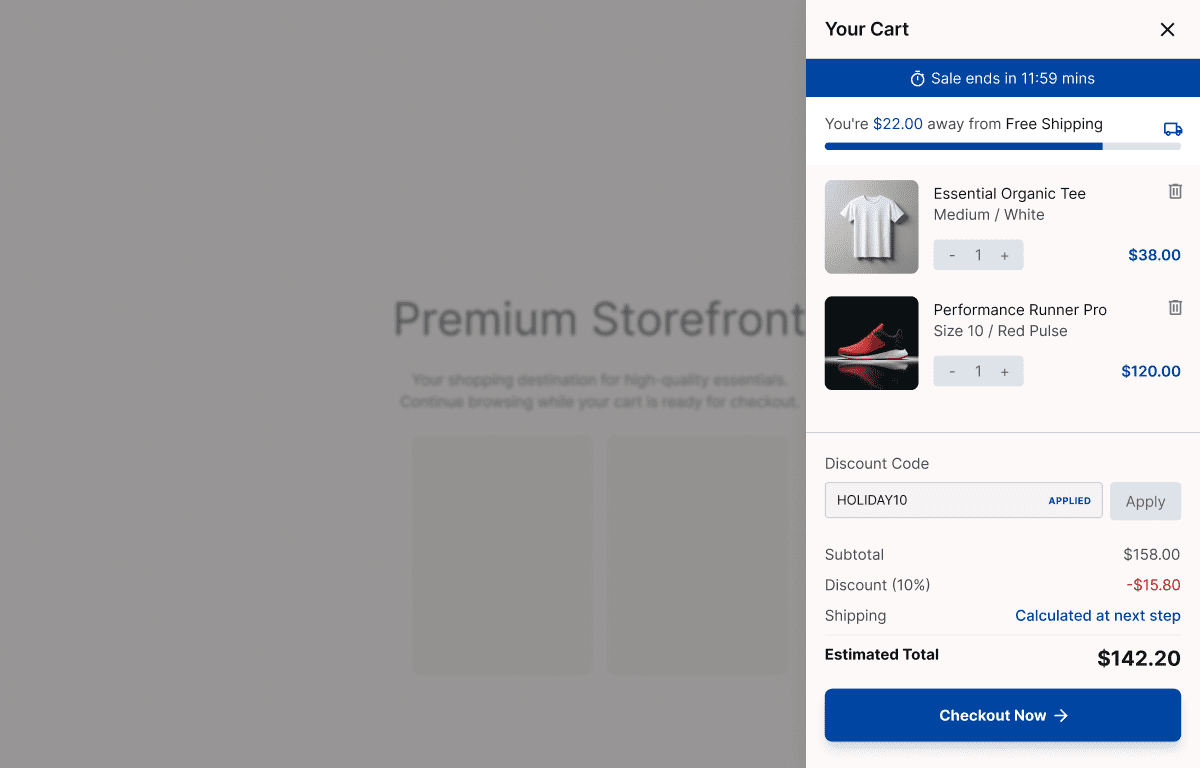
Countdown timer for Shopify limited-time offer
2.4 The discount is shown to the wrong customer segment
Not every shopper needs the same incentive. Showing the same offer to everyone is one of the most common causes of poor targeting in ecommerce. It reduces relevance for hesitant shoppers and wastes margin on customers who were already ready to buy.
In reality, each group has a different barrier and a different purchase intent ecommerce stage.
- First-time visitors need confidence, not just a lower price
- Returning shoppers may need a reminder of why they liked the store or a reason to come back, not a generic coupon
- VIP customers may respond better to early access than another percentage off
2.5 Shipping costs and checkout friction cancel the discount
If the checkout experience creates doubt or surprise, shoppers leave regardless of the offer. To reduce cart abandonment Shopify stores need to look beyond price and fix what happens after the discount is applied.
Common checkout friction include:
- High shipping cost appearing only at checkout
- Slow or unclear delivery estimates
- No visible return policy near the payment step
- Limited payment options that exclude the shopper's preference
- Mobile checkout issues that make the process frustrating
- Taxes or extra fees appearing late in the flow
- Forced account creation before purchase
Practical fixes are:
- Use transparent shipping messaging such as estimated delivery dates and carrier information on the product page and cart
- Apply checkout rules that automatically unlock free shipping at a set order threshold
- Offer multiple payment options including buy now pay later
- Simplify mobile checkout and reduce the number of required steps
- Allow guest checkout without forced account creation
While understanding why customers ignore discounts helps you craft better offers, it’s only half the battle. To truly succeed, you must also learn how to protect your profit margins.
3. How to protect profit margins when running Shopify discounts?
3.1 Use thresholds instead of blanket storewide discounts
A storewide discount is easy to launch but hard to control. It applies to every shopper, every product, and every order size. As a price promotion strategy, it often costs more than it returns.
Threshold incentives solve this margin erosion problem by making the reward conditional. Instead of discounting everything, you set a minimum order value that unlocks the benefit. For example, free shipping thresholds like "free shipping on orders over $75" or "15% off orders over $100" encourage shoppers to add more to their cart rather than simply paying less for what they already planned to buy.
To set the right threshold, check your current AOV and aim for at least 15 to 20 percent above that number. The goal is to make profitable discount campaigns easier to sustain over time.
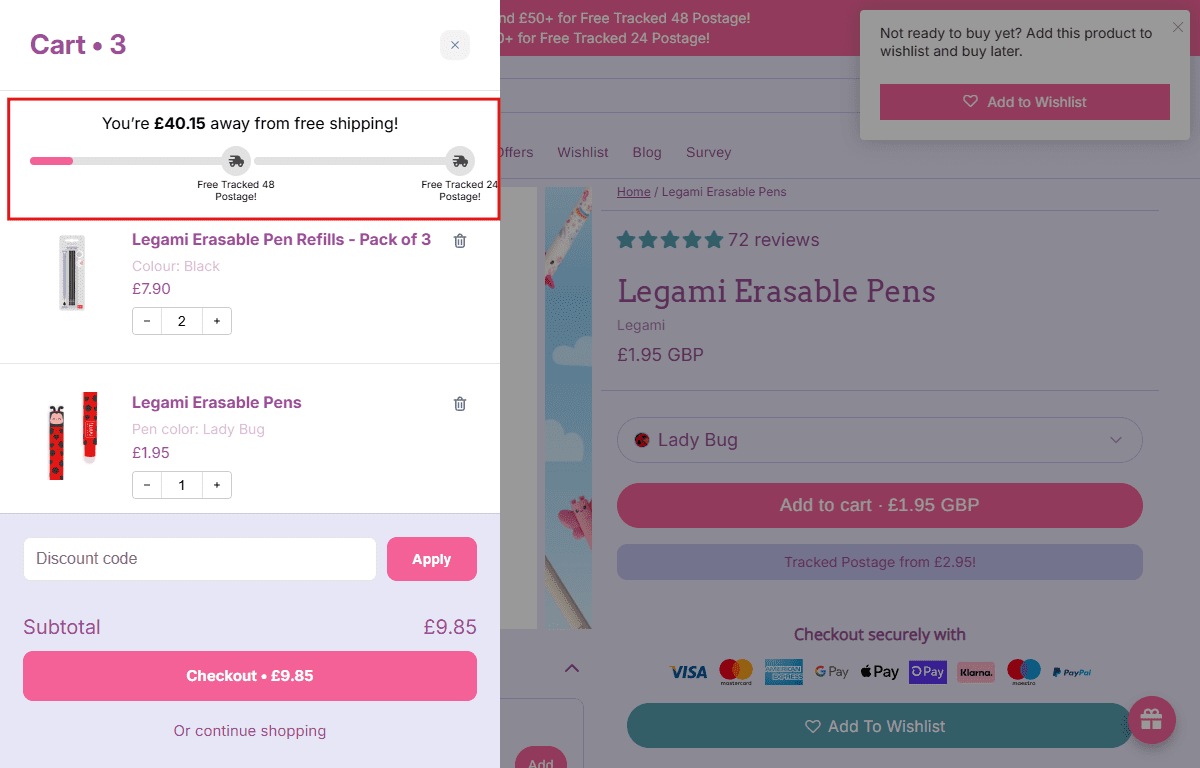
Thresholds for Shopify free shipping discount
3.2 Bundle products
Discounts are not the only way to drive more revenue. Bundle offer strategies can make deals feel more valuable by giving shoppers more for their money without lowering the price of individual products.
Value added promotions shift the focus from "how much did I save" to "how much did I get." A skincare store might bundle a cleanser, moisturizer, and SPF into a starter set. A coffee brand might pair beans, filters, and a mug. The total feels generous without requiring a steep markdown on any single item.
3.3 Best alternatives to discounts for Shopify stores
Not every conversion problem needs a price cut to solve it. Sometimes the barrier is trust, risk, or perceived value, and a non-discount incentive does the job better. These alternatives help to increase Shopify conversions without putting pressure on your margins.
Consider these options:
- Free gift with purchase Shopify to increase order value and reward the buyer, or BOGO/Buy X Get Y offers to move inventory while adding value. To see a more detailed analysis of how to use Shopify BOGO & free gifts, check out this article.
- Loyalty rewards and points systems to encourage repeat purchases without discounting
- VIP access and priority support to make top customers feel recognized
- Limited edition products to create desire and urgency without touching the base price
The goal of Shopify conversion rate optimization is not always about offering less. Sometimes it is about offering something different. When shoppers feel trusted, rewarded, and valued, they are more likely to act without needing a discount to push them over the line.
4. Pre-launch checklist for a better Shopify discount campaign
Before launching your next Shopify checkout discount campaign, take a few minutes to check that the offer is actually ready:
- Is the product value clear before the discount messaging appears?
- Is the audience specific enough to keep the offer relevant?
- Is there a believable reason for the promotion?
- Is there a deadline or action trigger that creates real urgency?
- Are reviews, returns, and shipping details visible on the page?
- Have you checked that the offer protects margin after costs?
- Is the discount easy to apply, whether through a code or automatically?
- Are checkout rules, exclusions, and conditions written in plain language?
- Does the offer support average order value rather than reduce it?
- Have you set up tracking to measure profit, not just order volume?
- Is the timing right for this audience and this campaign goal?
Conclusion
Why discounts do not increase sales? When a shopper does not understand the product, does not trust the store, or feels no reason to act now, a lower price will not change their mind. The five blockers covered in this article are the real reasons promotions fail.
Fix the foundation first. Build product clarity, trust, urgency, and a smooth checkout experience. Then use a Shopify discount to close the sale. That is when a discount does exactly what it should.
FAQs (Frequently asked questions)
1. Does Shopify do discounts?
Yes. Shopify includes a built-in discount system that merchants can manage directly from the Shopify admin dashboard. Store owners can create percentage discounts, fixed amount discounts, free shipping offers, and automatic promotions without installing additional apps.
2. How do you create a 50% off discount on Shopify?
Go to the Discounts section in your Shopify admin and click “Create discount.” Choose either “Amount off products” or “Amount off orders,” then decide whether the promotion will use a discount code or run automatically. Set the discount value to 50% and configure any eligibility conditions before saving the offer.
3. Why do Shopify discounts fail to motivate customers?
Discounts only reduce the price barrier. Customers may still avoid purchasing if they do not understand the product, lack trust in the store, feel no urgency, belong to the wrong target audience, or encounter friction during checkout. Conversion depends on the overall shopping experience, not just the size of the discount.