






TL;DR
BOGO and coupon codes serve different purposes. BOGO is an offer structure designed to move inventory and increase units sold. Coupon codes are a redemption mechanism ideal for targeted, trackable campaigns. Apply BOGO for volume and codes for exclusive access, while strictly controlling discount stacking.Choosing between BOGO vs coupon codes is not a straight contest. BOGO is the offer structure: a shopper buys a qualifying item and gets another item free or discounted, such as buy one get one free or buy one get one 50% off. A coupon code is usually the redemption mechanism. It can deliver many discounts, including BOGO in some setups.
The useful question is which approach fits your campaign goal without quietly damaging margin, checkout flow, or customer expectations. BOGO can help when you need to move more units, especially excess, aging, seasonal, or slow-moving stock, but the sources support that as vendor guidance, not proven performance evidence. Coupon codes usually fit better when you need targeting, tracking, or controlled access.
1. What is the real difference between BOGO and coupon codes?
The cleanest comparison separates the deal from its delivery. BOGO defines what the shopper receives: after buying a qualifying product, they get another item free or at a reduced price. A coupon code is one way to activate a discount. That discount might be BOGO, percentage-off, dollar-off, free shipping, or another offer.
Practical distinction: BOGO is an offer structure; a coupon code is usually a redemption mechanism. They can work together, so they are not mutually exclusive choices.
1.1 How BOGO offers work in the cart
A BOGO promotion uses cart rules to connect a qualifying purchase with a reward item. Common structures include buy one get one free, buy one get one 50% off, and buy two get one free. The qualifying and reward products may be identical, pulled from a collection, or tied to quantity requirements.
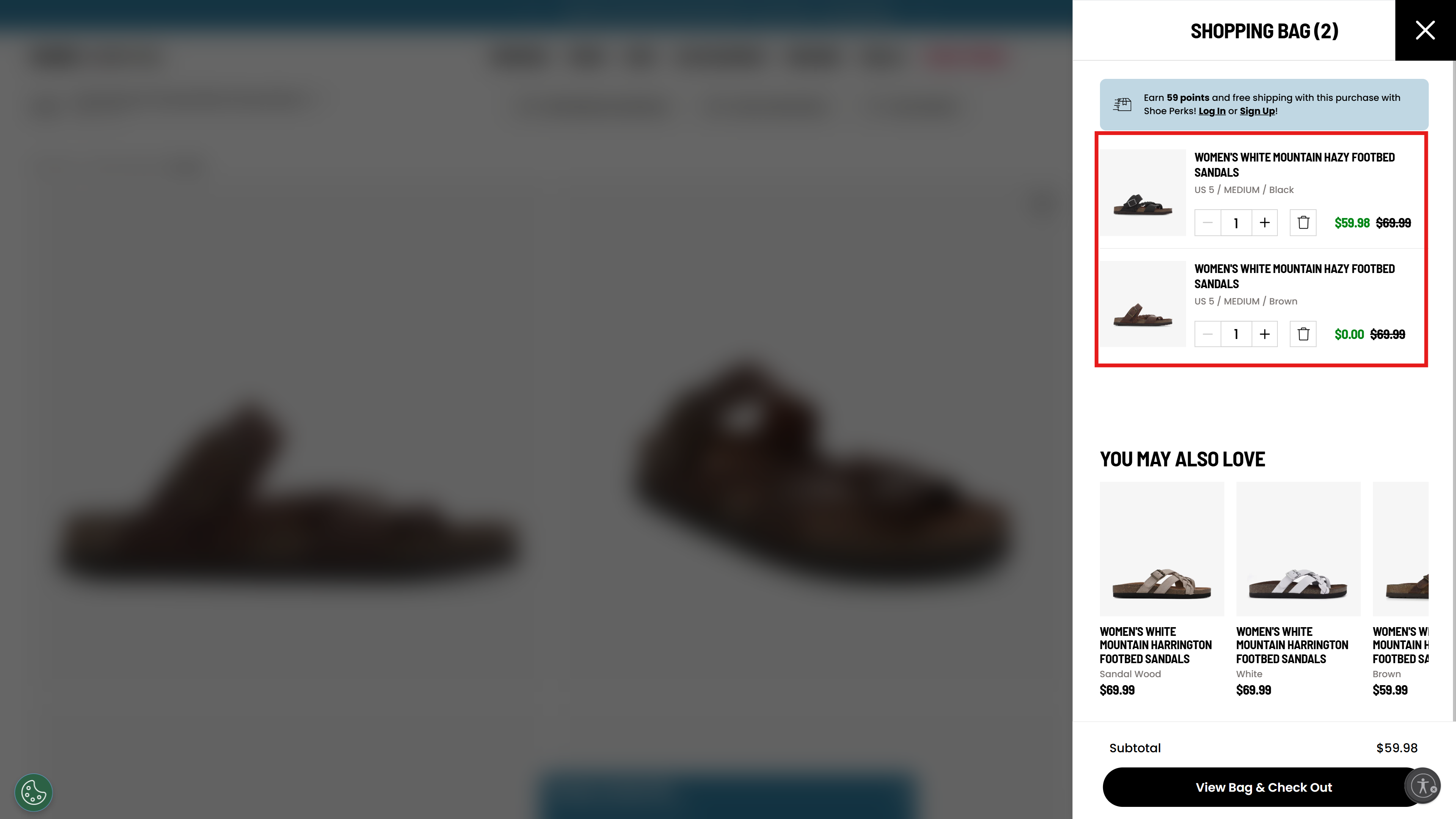
An example of BOGO.
The discount may apply automatically after eligible products enter the cart, or the shopper may need to add the reward item manually. State which item receives the discount, whether the offer repeats, and what happens when products have different prices. BOGO is a poor fit when shoppers are unlikely to want a second unit or when the extra discount strains margin.
1.2 How coupon codes work at checkout
With a coupon promotion, the shopper enters a code and the checkout validates its rules. Those rules can restrict eligibility by order value, product, customer group, redemption count, or campaign channel, depending on the platform.
A code can therefore deliver a BOGO deal rather than compete with it. Some providers position BOGO coupon codes for excess-inventory campaigns, although that is commercial guidance rather than proof of improved sales or profitability. Choose code-based delivery when controlled access or attribution matters; avoid it when manual entry adds friction without useful control.
1.3 Why “Buy One Get One Free” is not always the same as 50% off
If two identical, equally priced items are required, buy one get one free produces a 50% effective discount across that pair. Outside that narrow setup, the offers differ.
- A BOGO discount may apply only to the lower-priced item.
- A 50%-off coupon may cover one item, both items, or the full eligible order.
- BOGO requires a second unit; a standard 50%-off offer may not.
Returns, exclusions, and quantity caps can change the final economics. Compare the actual cart total and gross margin under identical baskets, not the headline wording alone.
2. Which discount is better for your campaign goal?
2.1 Use BOGO when you need to sell more units or move inventory
BOGO is usually the better fit when success is tied to product volume. Instead of giving customers a lower price on a single item, it encourages them to add an extra unit to the order.
One reason BOGO works is that shoppers can easily visualize the value of a free item. “Buy one, get one free” may look more substantial than a percentage discount, even when the economic value is similar. A bonus unit can be attractive for items people regularly use, share, or keep as a backup. The product also needs enough margin to absorb the discount.
Use cases:
- ✅ Consumables, seasonal products, excess inventory.
- ❌ Low-margin products, bulky items, premium brands where buying multiple units seems unnatural.
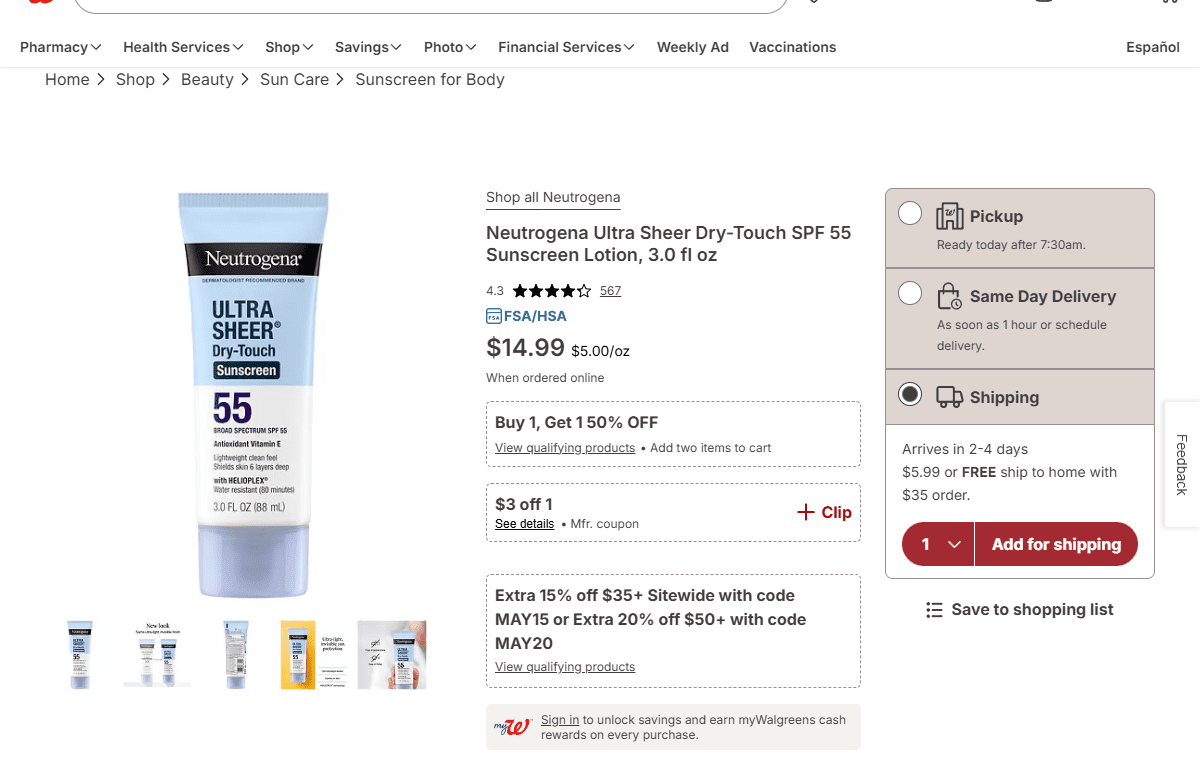
An example of BOGO.
2.2 Use coupon codes when you need targeting, tracking, or personalization
Coupon codes are more suitable when the campaign needs control. A coupon code can carry many offer types: percentage off, dollar off, free shipping, gift with purchase, or even BOGO.
A coupon code can make an offer feel exclusive. They let sellers limit access without showing the same discount to every buyer. Deadlines and redemption limits also add urgency, but only when those restrictions are genuine and clearly communicated.
Use cases:
- ✅ Email subscribers, loyalty members, influencer campaigns, customer recovery, and partner promotions.
However, the trade-off is friction. A visible promo-code field can cause purchasers to pause, compare, or look for a better deal elsewhere. If the promotion is intended for all customers, manual entry may add extra work without delivering much strategic benefit.
2.3 Use automatic discounts when checkout simplicity matters most
Automatic application creates a smoother checkout by removing the need for shoppers to enter a code. They can also reduce customer support issues caused by expired, invalid, or conflicting discount codes.
Use cases:
- ✅ Sitewide campaigns, threshold offers, and promotions advertised directly on product or cart pages.
Quick summary:
3. Which option protects profit margin better?
3.1 How to calculate the effective discount of a BOGO offer
Calculate the effective discount to understand the true cost of a BOGO promotion:
Effective discount = Discount value / Total regular price of qualifying items.
If two items normally sell for $40 each, the total regular price is $80.
- Buy one get one free: Buyers pay $40, so the effective discount is 50%.
- Buy one get one 50% off: Purchasers pay $60, so the effective discount is 25%.
This simple calculation helps estimate how much margin the promotion actually consumes.
3.2 When dollar-off and free shipping coupons are safer
Fixed dollar discounts can be easier to control because the maximum discount is known in advance. A $10 coupon costs no more than $10 before margin effects, while a percentage discount grows as the cart grows.
Free shipping also tends to be more margin-friendly when shipping costs are predictable and protected by a minimum order threshold. It seems riskier when shipping varies widely by region, product size or weight.
3.3 Set guardrails before launching
No matter which promotion you choose, establish clear limits before the offer goes live:
- Minimums: require a qualifying quantity or order value.
- Exclusions: exclude low-margin, sale, premium, or limited-stock products.
- Caps: limit redemptions per order, customer, campaign, or SKU.
- Stacking rules: decide whether the offer can combine with other deals.
4. How to set up BOGO and coupon codes without hurting profitability
4.1 When to use automatic BOGO instead of a promo code
Automate BOGO when the promotion is available to all eligible shoppers. The cart should identify the qualifying item, add or discount the second item as intended, and explain what the shopper must do if the free item is not added automatically.
This removes code entry from the customer path. However, the available evidence does not establish that automatic BOGO improves conversion or that promo-code fields cause abandonment. Treat reduced checkout effort as a design advantage, then test the commercial result.
Do not use automatic application when access must be restricted to an email segment, influencer audience, loyalty tier, or customer-service exception. In those cases, a unique or controlled code provides clearer eligibility and attribution.
4.2 How to handle discount stacking, sale exclusions, and redemption limits
Define combination rules before launch. Decide whether BOGO can stack with percentage-off, order-level, sale-price, loyalty, or free-shipping discounts. If stacking could create an unacceptable effective discount, block the combination or apply the single best eligible offer.
Set exclusions for low-margin products, gift cards, subscriptions, clearance items, or protected brands where appropriate. Also specify per-order quantities, customer-level redemption limits, campaign dates, and minimum purchase conditions.
Recommendation: Use automatic BOGO for broad, simple eligibility. Use a code when controlled access or campaign identification justifies the extra checkout step. In either case, place a test order covering stacking, returns, limits, and mobile checkout before publishing.
4.3 Common mistakes that make either discount less profitable
- Running BOGO on products where the second unit adds little value to the shopper.
- Letting BOGO stack with percentage-off, sale-price, or free-shipping discounts without checking the combined margin hit.
- Using coupon codes so often that customers learn to wait, search, or abandon checkout for a better deal.
- Applying either offer to protected brands, gift cards, subscriptions, or low-margin items without exclusions.
- Judging success by redemptions instead of contribution margin, inventory movement, and repeat purchase behavior.
Choose BOGO when unit movement is the main job and the product economics support it. Choose coupon codes when targeting, attribution, access control, or brand protection matters more than pushing multiple units.
Conclusion
The practical choice in BOGO vs coupon codes is not which tactic is universally better. BOGO is an offer structure: a shopper buys a qualifying item and receives another free or discounted item. Coupon codes are a redemption mechanism, and they can even deliver a BOGO offer.
Use BOGO when the job is to move more units, clear suitable inventory, or make a multi-item purchase feel worthwhile, provided the margin math still works. Vendor guidance often frames BOGO this way for excess or slow-moving stock, but the evidence here does not prove sales or profit outcomes.
Use coupon codes when targeting, access control, attribution, or partner tracking matters more than unit volume. In either case, set exclusions, stacking rules, caps, and success metrics before launch. The better discount is the one that fits the campaign goal without hiding the real margin cost.