






TL;DR
Fixed bundles are pre-packaged sets perfect for fast checkouts, gifting, and pairing complementary products. In contrast, mix and match bundles let shoppers customize their orders, making them ideal for diverse preferences, subscriptions, and high-SKU catalogs. Choose fixed sets for guided simplicity, or customizable bundles to maximize personalization.When comparing a fixed bundle vs mix and match bundle, there is no universal conversion winner. Instead, the better-performing format depends entirely on your customers' buying habits. Fixed price bundles convert best when buyers want a quick, guided decision. Mix and match deals drive higher conversions when personalization and product choice matter.
1. Understanding fixed bundles vs mix and match bundles
Product bundles are one of the most popular pricing and merchandising strategies in ecommerce, especially on Shopify. There are several ways to structure a bundle, but two of the most common approaches are fixed bundles and mix and match bundles. While both encourage customers to purchase multiple products together, they offer very different shopping experiences.
1.1 What are fixed bundles?
A fixed bundle is a pre-made set of products sold together as a single offer. The merchant decides which items belong in the bundle, while customers choose whether to buy the bundle as presented.
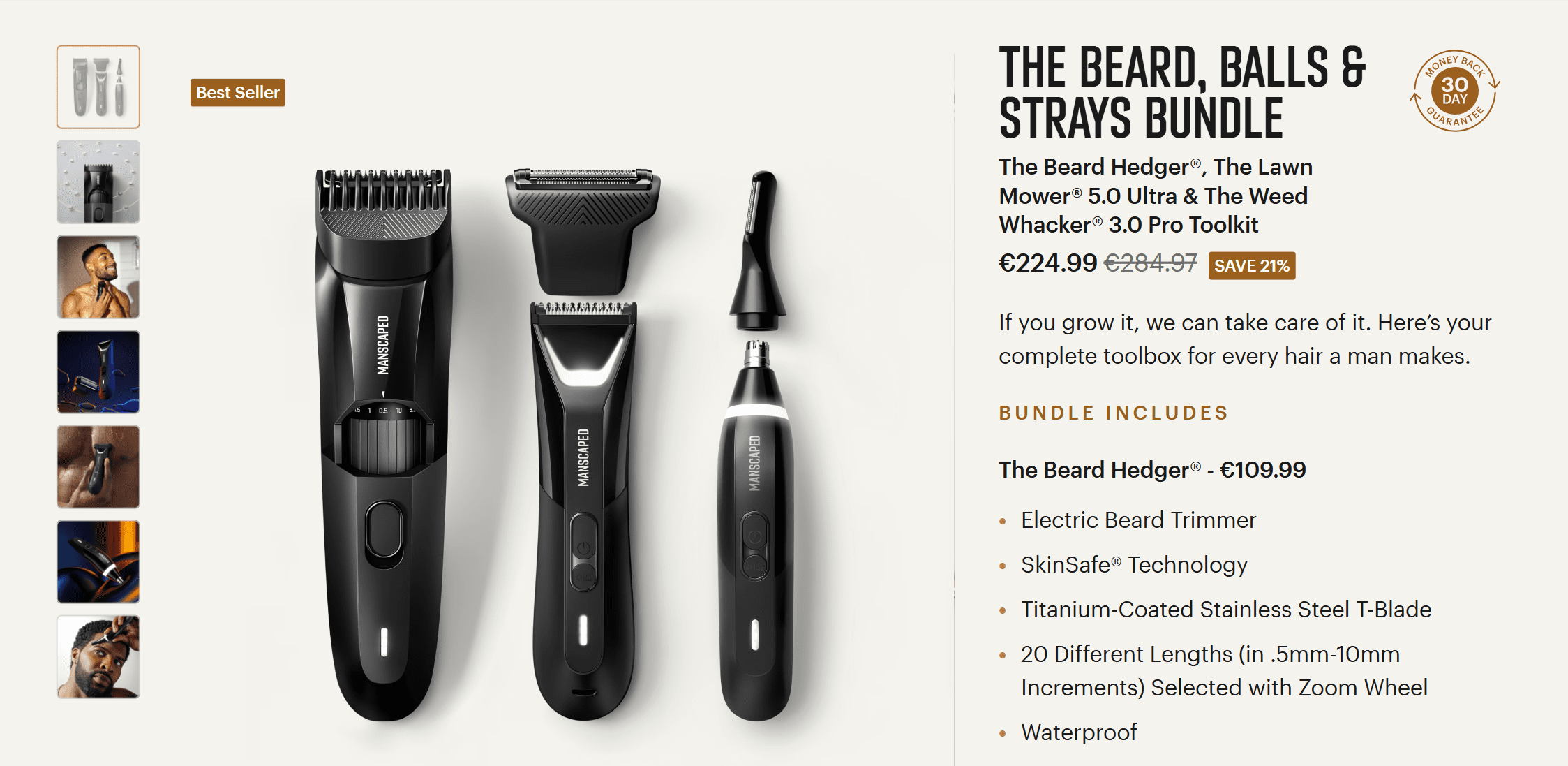
An example of fixed bundling,
Unlike customizable bundles, shoppers cannot swap or replace items. The product mix stays the same for every order. Because the contents do not change, prebuilt product bundles are easy for shoppers to understand. Shopify merchants will have full control over the product mix, pricing, and presentation.
1.2 What are mix and match bundles?
Mix and match bundles let customers build their own bundle from a defined group of products. Instead of buying a pre-set kit, shoppers can pick the items they want within the bundle.
Buyers have flexibility to select different products, flavors, colors, sizes, or variants based on their preferences. The shop owner still controls which products are eligible and how the bundle is built.
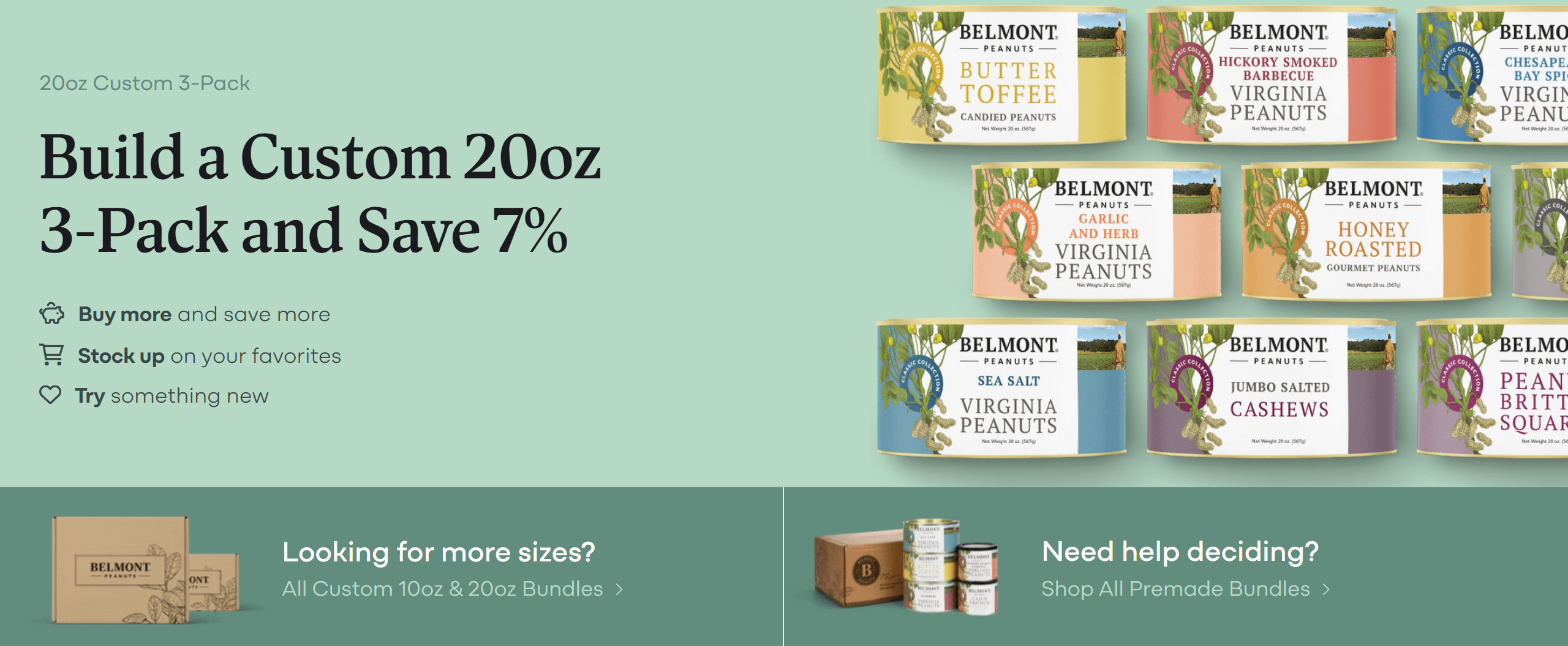
An example of mix and match bundling.
1.3 What is the real difference between a fixed bundle and a mix and match bundle?
Both bundle types sell multiple products on one offer. Choosing between them is often a balance between simplicity and customization. Curated bundles focus on convenience, while custom product bundles focus on customer choice.
The conversion tradeoff is straightforward. Bundle sets make buying decisions easier and faster. Meanwhile, pick and mix bundles give shoppers more control over what they purchase. Neither format wins in every situation. The best option depends on how your buyers prefer to shop.
-
Keep in mind: If customers ask, “What should I buy?”, start with a fixed bundle offer. If they ask, “Can I choose my own items?”, test a mix and match discount.
2. When are fixed bundles the better choice?
2.1 Products that naturally belong together
Use a premade bundle when the products form a complete solution. If the items are an obvious match, buyers don't need to figure out why they go together.
- A laptop sleeve with accessories.
- A shampoo and conditioner pair.
- A beginner painting kit...
If most shoppers build the same set anyway, customization tends to add steps without much value. A fixed bundle pack also keeps the offer clear and focused on the outcome.
2.2 Seasonal, promotional, and gift offers
Fixed bundles can work well for holidays, launches, limited-time promotions, and gift sets. In these situations, purchasers may be moving quickly, comparing several stores, and looking for a neat answer.
Seasonal merchandising shapes how products are bundled, presented, priced, and stocked. A fixed holiday set is often easier to promote across email, ads, landing pages, and retail displays.
2.3 Low-consideration add-ons and impulse purchases
When the add-on is small and easy to accept, a prebuilt bundle is often the better option. The goal is to reduce friction. Don't interrupt a low-consideration purchase with unnecessary choices. Customers need to easily see the bundle price and add the entire set to their cart.
2.4 Inventory you need to move together
Preset deals allow Shopify merchants to manage inventory better because they decide which products move together. This can help balance stocks, highlight supporting products and move slow-selling accessories.
However, shoppers can spot a bundle that is just a clearance sale with a discount. The set still needs a reason to exist. The best fixed price bundles solve both customer needs and your inventory issues.
3. When do mix and match bundles usually make more sense?
3.1 High-SKU catalogs with interchangeable products
Choose your own bundles work best when the catalog has many similar products that can be combined in several valid ways.
- Candles, snacks, beverages, cosmetics, socks, teas, pet treats, craft supplies, and pantry goods all fit this pattern.
In these categories, the value is not only the price reduction. Buyers also want the freedom to choose products that fit their preferences.
For merchants, bundles are a great way to showcase more items. A customer who came for one flavor may discover new ones while putting the set together.
3.2 Replenishment products with repeat purchase behavior
A fixed set is useful for discovery, but can become annoying for repeat purchases. If the customer loves two items but dislikes the third, they won't want to buy it again.
Replenishment products (e.g. coffee, pet food, skincare) may perform well with custom bundle offers. Returning buyers already know their favorites, so they just want to restock an exact mix of what they use.
3.3 Subscription and build-a-box offers
Subscription and build-a-box models often depend on personalization. If customers are committing to recurring orders, they may expect control over what arrives.
This does make operations more complex. To actually boost sales, the buying flow must be clear: Pick a box size -> Select items -> Review the bundle -> Check out.
3.4 Categories where preferences vary widely
Implement mix and match when preferences vary widely between shoppers. Factors such as flavor, fragrance, shade, fit, size, dietary requirements, or product fit can make curated bundling less appealing. A best sellers pack may still work, but it will not satisfy everyone.
In preference-heavy categories, personalization is part of the value. It is the reason customers may feel comfortable buying more.
4. When should you use both bundle sets and customizable bundles?
Many Shopify stores do not need to choose only one format. Apply fixed pricing combinations for discovery and first-time orders, then offer custom bundle deals as buyers become more familiar with the product range.
You can also place the two formats at different points in the sales funnel. Fixed bundles work well in ads, landing pages, and gift guides because they explain quickly. Pick your favorite plan tends to be more effective for purchasers already browsing the catalog because they are willing to engage.
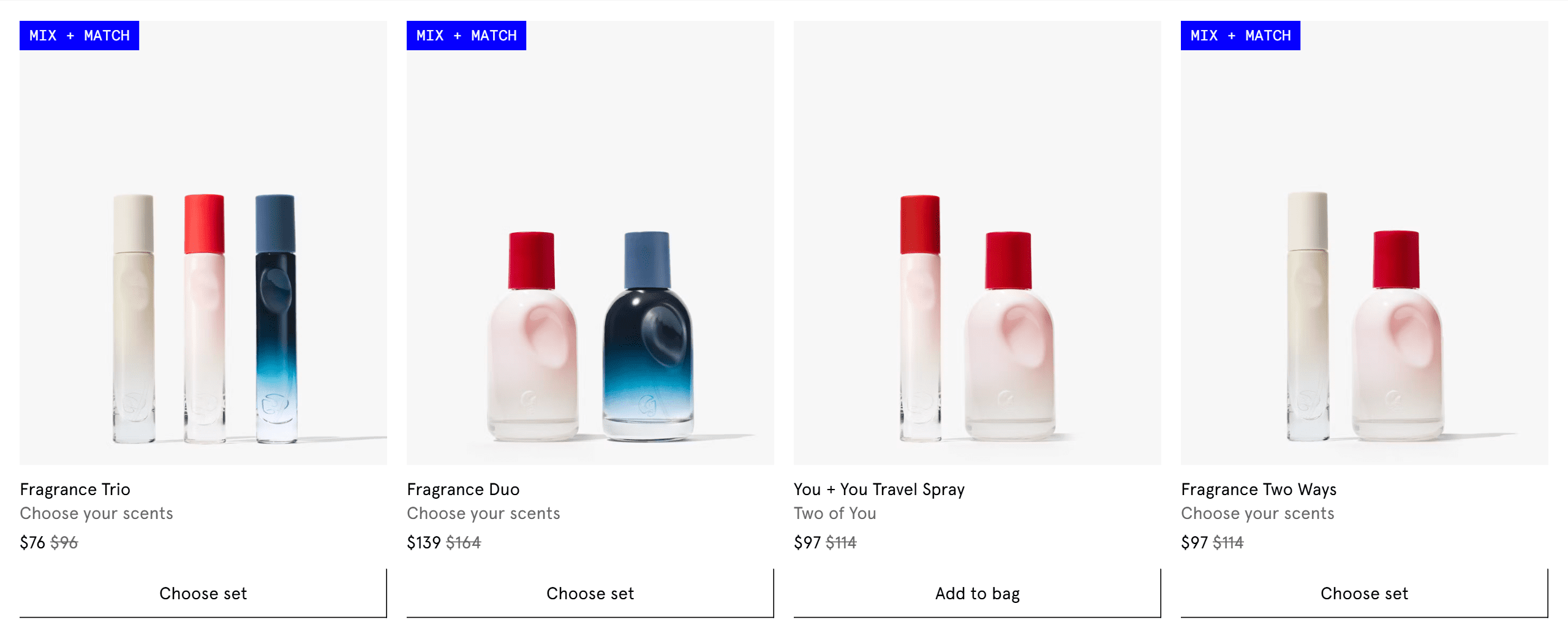
Glossier applies both kinds of bundles.
-
Quick summary:
5. How pricing and discounts influence the performance of each bundle
5.1 Simple bundle discounts for fixed sets
Fixed bundles are easiest to price because the products in the bundle never change. Shopify merchants can calculate margins more accurately and present a clear offer with a single bundle price. Fixed pricing strategies are most effective when:
- Simple messaging: Avoid complex pricing tables or long explanations.
- Clean merchandising: Show one crossed-out original price, one final bundle price, and a single "Add to Cart" button.
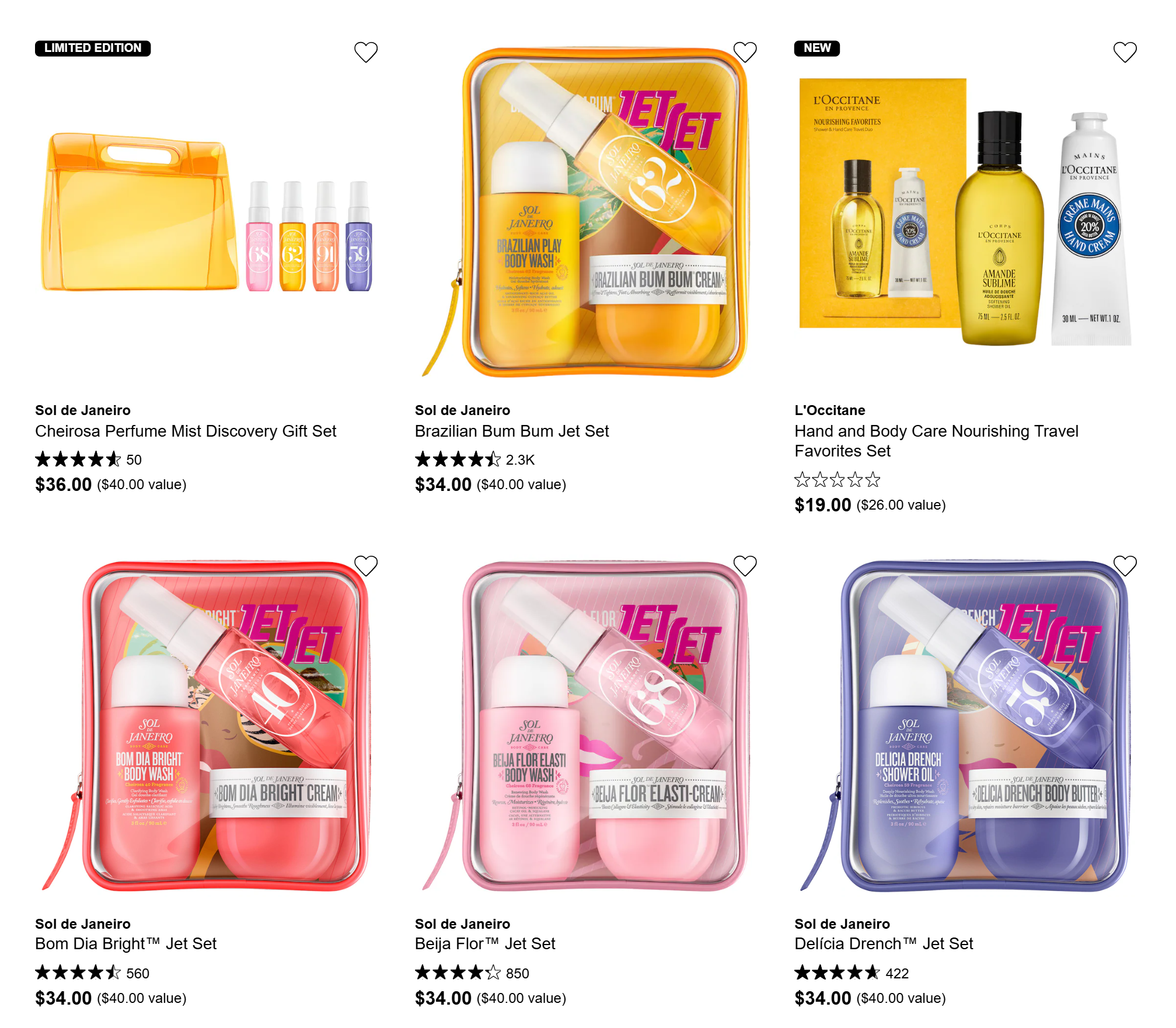
Each curated bundle will have its own price.
5.2 Tiered savings for build-your-own bundles
Create your own bundles often use tiered savings to encourage larger purchases. The goal is to protect profit margins. Tiered discounts should reward meaningful basket growth, not reduce revenue on orders customers would have placed anyway.
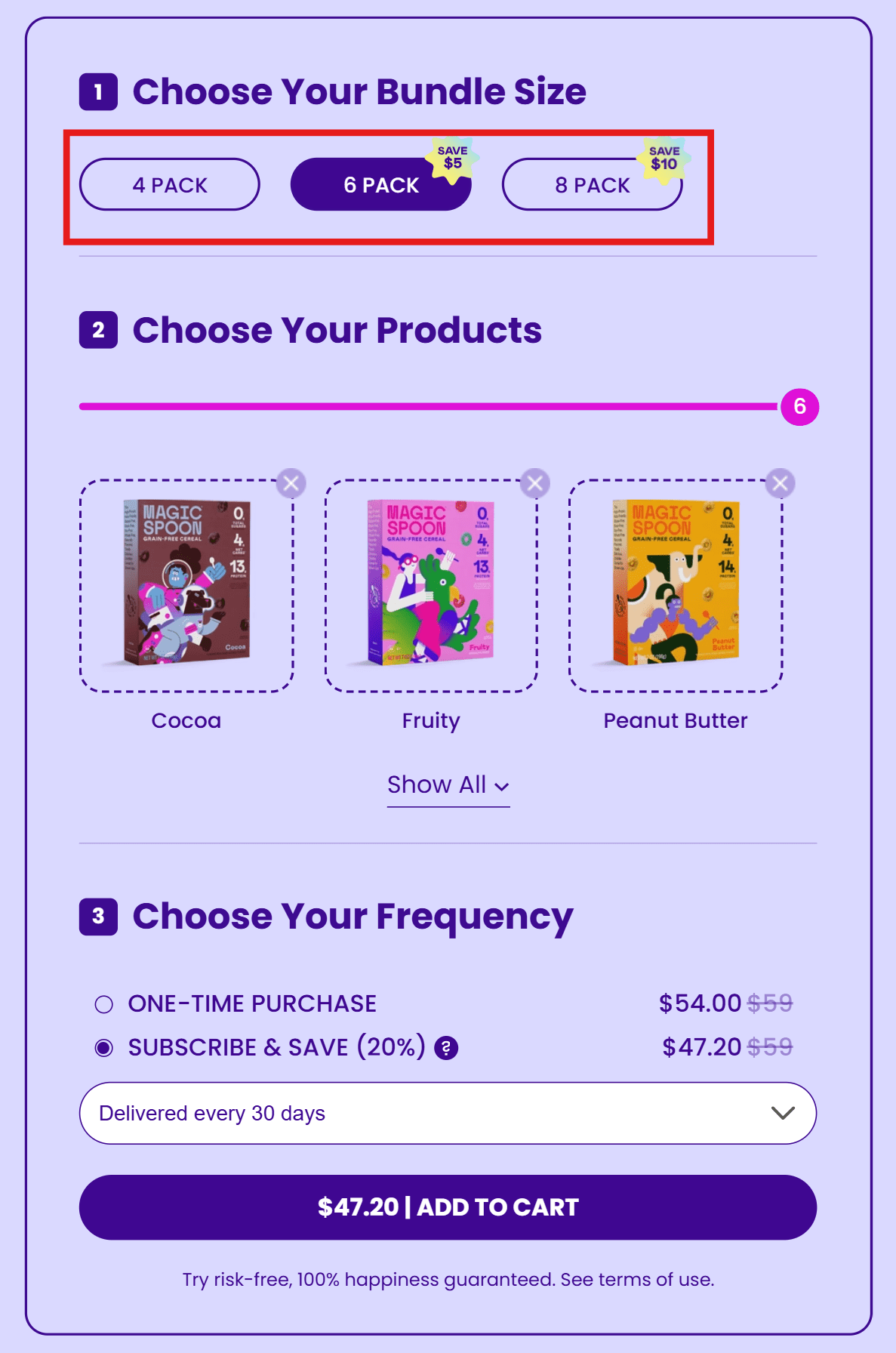
Buy 4 packs at regular price, 6 packs to save 5$, and 8 packs to get 10$ off.
However, a discount cannot fix a confusing bundle. If customers must read long rules, compare too many options, or guess which products qualify, they may abandon the offer altogether. In a landmark study by Iyengar and Lepper, shoppers who saw 24 jam flavors were less likely to make a purchase than those who saw only 6 options, even though the larger display attracted more attention.
Clarity matters as much as pricing. Shoppers should instantly understand what they are getting, why the bundle is valuable, and how to claim the offer.
5.3 How minimum quantity rules affect average order value
Minimum quantity rules are one of the main drivers in a build a bundle offer. But higher thresholds can also reduce conversion if shoppers cannot find enough items they want.
For prebuilt bundles, the required quantity is built into the offer. In contrast, mix and match requires customers to actively build the set. This process must be designed to look easy and achievable, not like a chore.
- Show clear progress: Always let buyers know exactly where they are in the selection process (e.g., display a status like "2 of 4 items selected"). A study about Goal Gradient Effect suggests that people are more likely to complete a task when they can see they are making progress.
- Seamless user experience: Group eligible products logically and make it easy to add, remove, or swap items.
6. What operational tradeoffs should you expect before choosing a bundle format?
6.1 Inventory tracking and SKU complexity
Because the components within premade bundles are completely known, it's much easier to predict demand and manage inventory. On Shopify, you can track bundle inventory in 2 ways below:
- As a single SKU: Treat the whole bundle as one new product.
- Via Shopify bundling apps: Automatically deduct stock from the individual items inside the bundle.
Custom bundles are more complicated because each order can contain a different combination. Inventory must update accurately across all selected items. If one item runs out of stock, the builder needs to hide it, replace it, or explain the issue without breaking the bundle.
6.2 Checkout simplicity and app requirements
Curated combo offers usually create a cleaner checkout with less technical complexity. Customizable deals may require more advanced logic, especially for discounts, variant limits, inventory syncing, and cart display.
- Important note: Before launch, test the full journey from product page to checkout and post-purchase flows.
6.3 Fulfillment risks with custom bundle offers
Custom bundles can increase the chance of picking and packing errors. Around 23% of ecommerce returns occur because customers receive the wrong product.
Mistakes happen more often if products look similar, have many variants, or are fragile. To prevent this, packing slips must show every component, not only the bundle name.
Decide return and exchange policies clearly before the campaign goes live:
- If a customer returns one item from a discounted bundle, what happens to the discount?
- If an item is out of stock after purchase, can you substitute it?
82% of consumers consider free returns an important factor when deciding where to buy.
Conclusion
Bundle strategies should focus on customer behavior decisions. The question is whether shoppers want more guidance or more control. Some appreciate a curated recommendation. Others want freedom to build their own solution. When the bundle matches how buyers already shop, conversion tends to follow.
Frequently asked questions
1. What is the difference between a prebuilt bundle and a build your own bundle?
A prebuilt bundle contains a set group of items that the seller chooses. In contrast, a build your own bundle lets customers pick from a specific list to build their own bundle.
2. Are custom bundle offers harder to manage than fixed price packs?
Usually yes. Custom bundle offers can require more inventory rules, variant tracking, and pricing logic than fixed price packs.
3. When should a business use a fixed bundle?
Use a preset kit when the products complement each other, or when you need to clear specific inventory. They are ideal for creating fast and low-consideration offers.
4. When is a pick and mix deal the better choice?
A pick and mix bundle is better when your catalogs have multiple flavors or colors. It allows customers to buy exactly what they prefer.
5. Can curated bundles and choose your own bundles be used together?
Yes. Many Shopify stores run both. You can use curated bundles for quick, beginner-friendly promotions, while offering choose your own bundles to give returning buyers a flexible, personalized experience.