






TL;DR
Frequently Bought Together data is just a starting point, not a complete bundle strategy. To effectively improve revenue on Shopify, transform these co-purchase insights into structured offers like pre-built sets or mix-and-match bundles. Align recommendations with customer intent, optimize placements, and track profit margins for sustainable growth.To turn frequently bought together into a bundle strategy, start by identifying products that customers naturally purchase together, then turn those relationships into planned offers. Avoid relying on a recommendation widget alone. Shopify merchants should define the bundle structure, pricing, placement, and success metrics that fit your store goals.
The key is to treat co-purchase data as a starting signal, not the strategy itself. In this guide, you'll learn how to find product bundle ideas from frequently bought together, choose the right offer type, protect margin, and measure performance.
1. How Frequently Bought Together becomes a bundle?
1.1 How Frequently Bought Together differs from product bundling?
Frequently Bought Together suggests items commonly purchased in the same order. A FBT widget typically uses sales history, co-purchase data, product rules, or manual settings to surface relevant products.
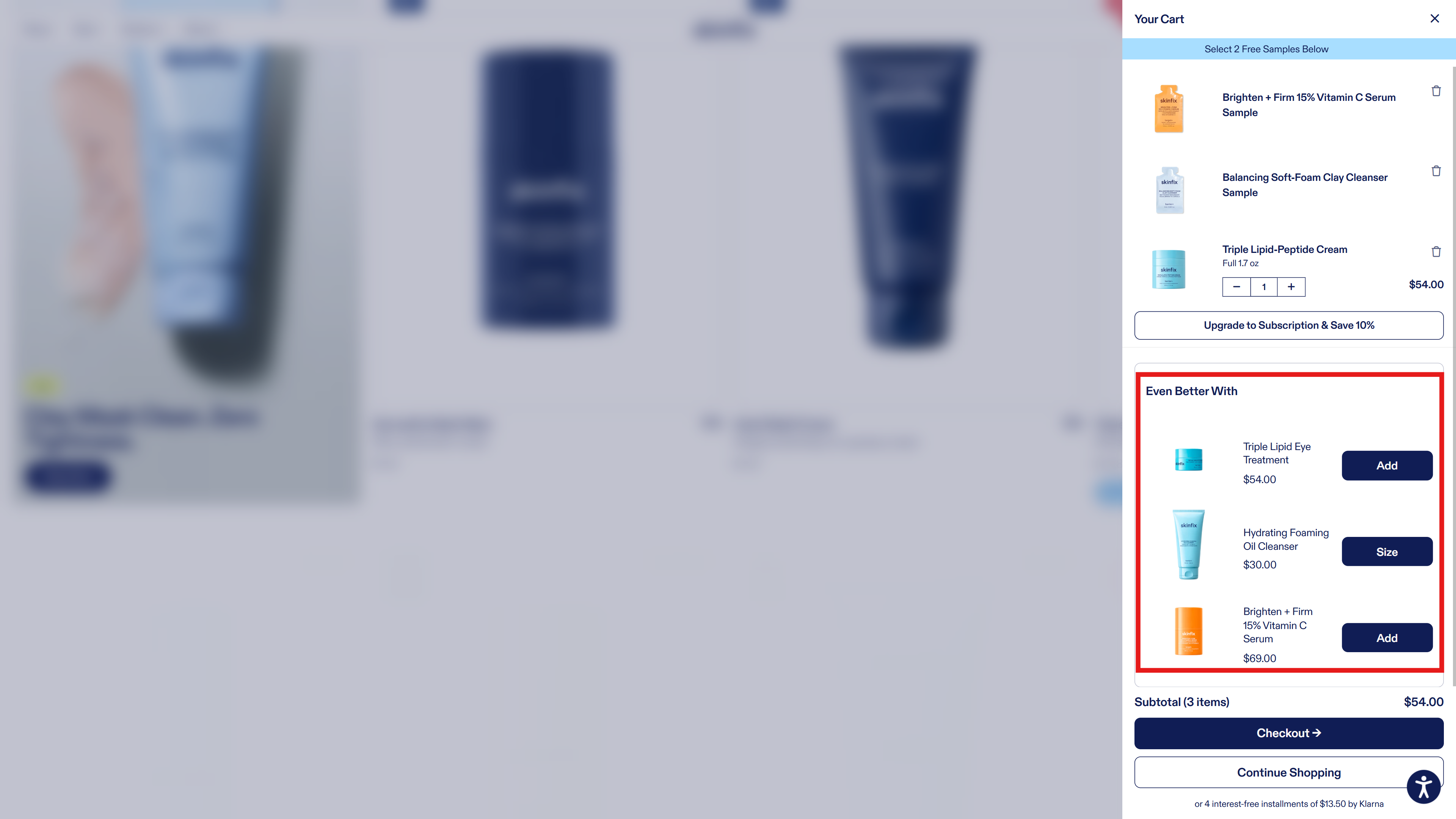
An example of Frequently Bought Together syle.
The goal of FBT is to help shoppers discover related products they may need. However, it does not automatically create an offer. Customers still have to decide whether adding them makes sense.
This is where bundle plans differ. While FBT identifies potential product relationships, a bundle strategy turns those connections into a structured offer. It defines:
- Which products belong together,
- How they should be packaged,
- Where they should appear,
- How they should be priced,
- And how success will be measured.
1.2 Why recommendations alone are not enough
Product recommendations can be relevant without being persuasive. A customer may see related items and still wonder:
- Do I need these now?
- Will they work with the product I chose?
- Is there a reason to add them today?
Frequently bought together data answer those questions by displaying products purchased together. It gives merchants a starting point for creating more useful and intentional bundles.
📷 For example, instead of listing a camera, memory card, battery, and case separately, an online store can package them into a ""Camera Starter Kit."
Using FBT as bundling strategies changes three things: clarity, commitment, and measurement.
- Clarity: Customers see why the products belong together.
- Commitment: Merchants also take control of the offer rather than leaving the widget to do all the work.
- Measurement: Performance becomes easier to track for a defined offer.
The best bundle ideas are built around a simple promise: complete the routine, start with the essentials, replenish supplies, or protect your purchase. If the promise is unclear, the bundle can feel like a discount trap or random upsell.
2. How to find product pairings worth bundling?
Not every frequently bought together product group deserves a bundle. Combine order history with merchandising judgement to find which pairings solve customer demand.
2.1 Which purchase signals matter most
Raw co-purchase count helps, but it is incomplete. A bestseller will appear with dozens of other items simply because it sells often. Consider stronger signals below:
- Attach rate: How often Product B appears when Product A is purchased.
- Directional relationship: Whether one product drives demand for the other.
- Repeat pattern: Whether the second item is often bought later and could be pulled into the first order.
- Margin mix: Whether the combination can support a discount or convenience offer.
- Customer intent: Whether the products serve the same use case, routine, or occasion.
One retail case study found that around 65% of consumers who purchased olives went on to buy a related item, cheese.
2.2 How to separate true product fit from accidental co-purchases
Unrelated products could appear connected because of temporary factors such as promotions, free shipping thresholds, seasonal campaigns, and homepage placement. Before building related product bundles and add-ons, ask:
- Were these products promoted together recently?
- Did purchasers buy one product because another was out of stock?
- Are both items popular on their own?
- Would a first-time customer immediately understand the relationship?
If the connection requires a long explanation, it is usually better as a recommendation than a bundle.
2.3 When to prioritize complementary products, replenishment items, or starter kits
Prioritize the product relationship that best matches customer intent.
- Choose complementary products when one product improves the use of another (e.g. A device and its accessory, a garment and its care product).
- Apply replenishment items when the second product will be needed soon: filters, refills, batteries, supplements, or consumables. The goal is to help shoppers stock up before they run out.
- Use starter kits for first-time buyers who need guidance by presenting a complete first setup.
2.4 What can disqualify product bundle ideas
Some attractive co-purchases are not enough if the bundle causes operational problems. Disqualify a bundle when:
- A key item is frequently out of stock.
- Products ship from different locations.
- The bundle discount erases contribution margin.
- Return rules become confusing.
- The offer may slow checkout or create variant-selection errors.
3. Which bundle type should you use for each product relationship?
The right bundling type depends on how closely the products are related and how much control shoppers need. Do not force every FBT combination into the same format. A rigid bundle from FBT can hurt choice. In contrast, a basic recommendation may not be compelling enough to drive action.
3.1 When a pre-built bundle is the simplest choice
Use a pre-built bundle when the right combination is obvious and stable.
This can fit starter kits, complete sets, gift boxes, and products that are typically bought with the same accessories.
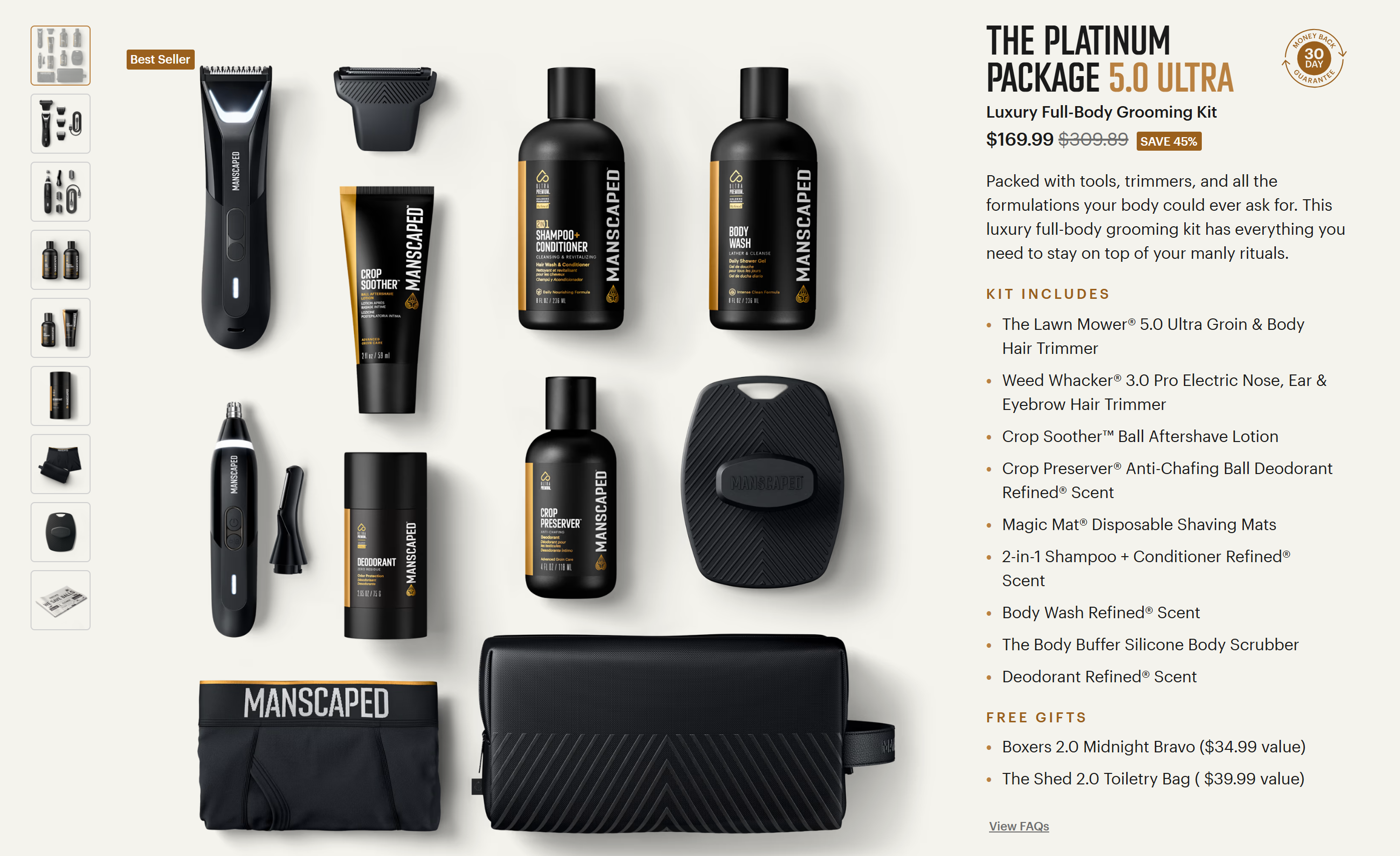
A curated full-body grooming kit.
The advantage is simplicity. Buyers see one offer, one value message, and one add-to-cart action. For shop owners, predictable bundle components can also make inventory planning easier.
The downside is flexibility. If purchasers often need different sizes, colors, quantities, or compatibility options, fixed bundles can seem too restrictive.
3.2 When a mix and match bundle gives customers more control
Choose a mix and match bundle when the relationship between products is clear but preferences vary.
Common cases include flavors, shades, sizes, scents, refills, and build-your-own routines."
The key is to provide flexibility without creating complexity. “Choose any three” is much more understandable than “choose anything from the catalog.”
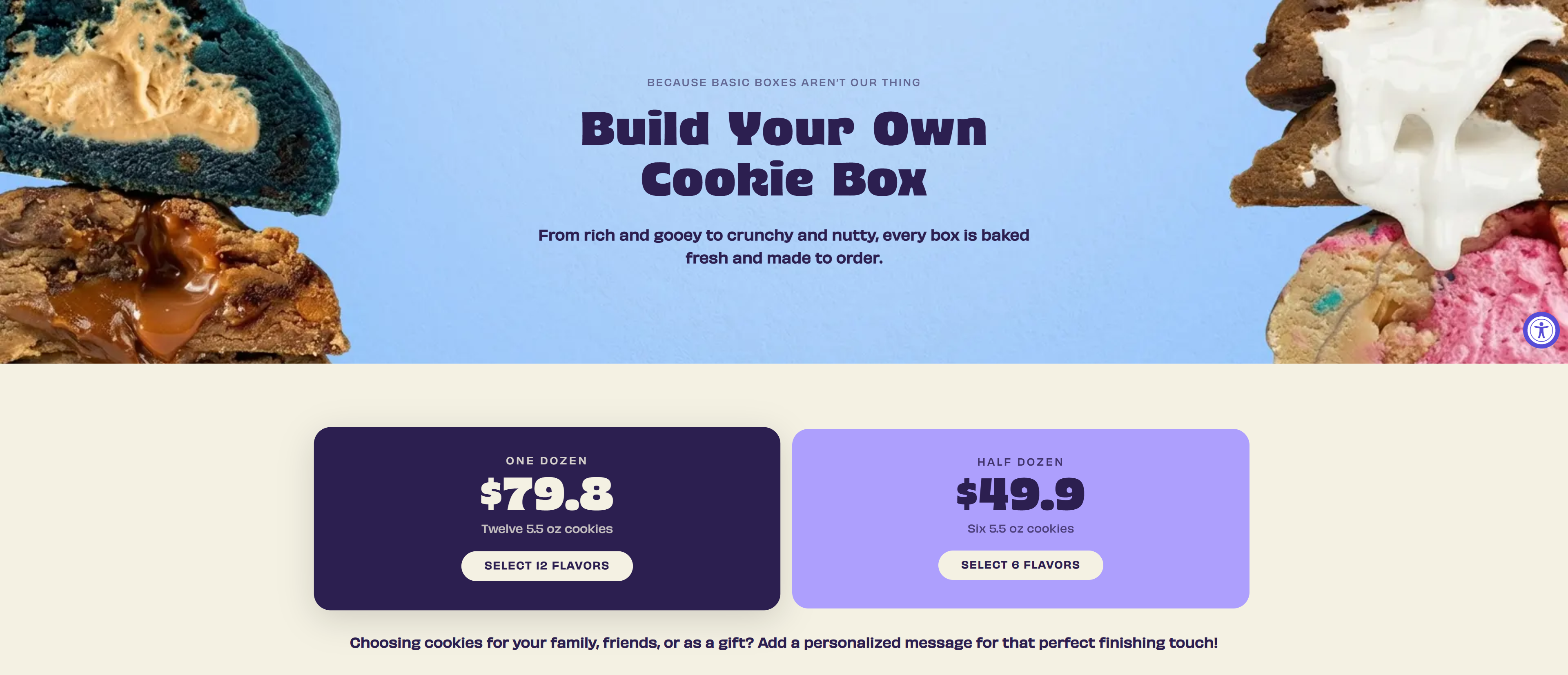
Fat & Weird Cookies allow you to build your own cookie box.
If customers cannot understand the rule in one sentence, the bundle is probably too complicated.
3.3 When an add-on is better than a full bundle
Sometimes the best merchandising bundle with frequently bought together is not product bundling at all. A one-click add-on can be more effective when the secondary item is low-risk, highly compatible, and easy to decide on.
Examples include warranties, protection plans, small accessories, refills, or care products.
Apply full bundling only when the combined offer forms a stronger solution. If customers only need a small nudge, add-on products may be cleaner.
Quick summary: The quick framework below already matches the product relationship with the right offer type:
4. How should you price bundles without destroying margins?
4.1 When a percentage discount makes sense
Percentage discounts work when customers already understand the value of individual products.
- Most effective for small bundles with similarly priced products.
If one item is significantly more expensive than others, a percentage discount may reduce margins more than necessary.
4.2 When a fixed bundle price feels clearer
Fixed pricing simplifies the decision. “Complete kit for $99” can be clearer than listing multiple line-item discounts, especially for starter kits or giftable sets.
- Best when the bundle has a strong identity.
Before launch, calculate the bundle’s margin as a unit and compare it with the expected margin if items were purchased separately.
4.3 Use Buy More Save More without training customers to wait for deals
Buy More Save More performs well when purchasers have a natural reason to buy multiples: replenishment, household use, gifting, team needs, etc.
Avoid training customers to wait for discounts. Keep tiers simple and tie the offer to a clear use case (stock up, build a routine, prepare for travel, or refill before running out).
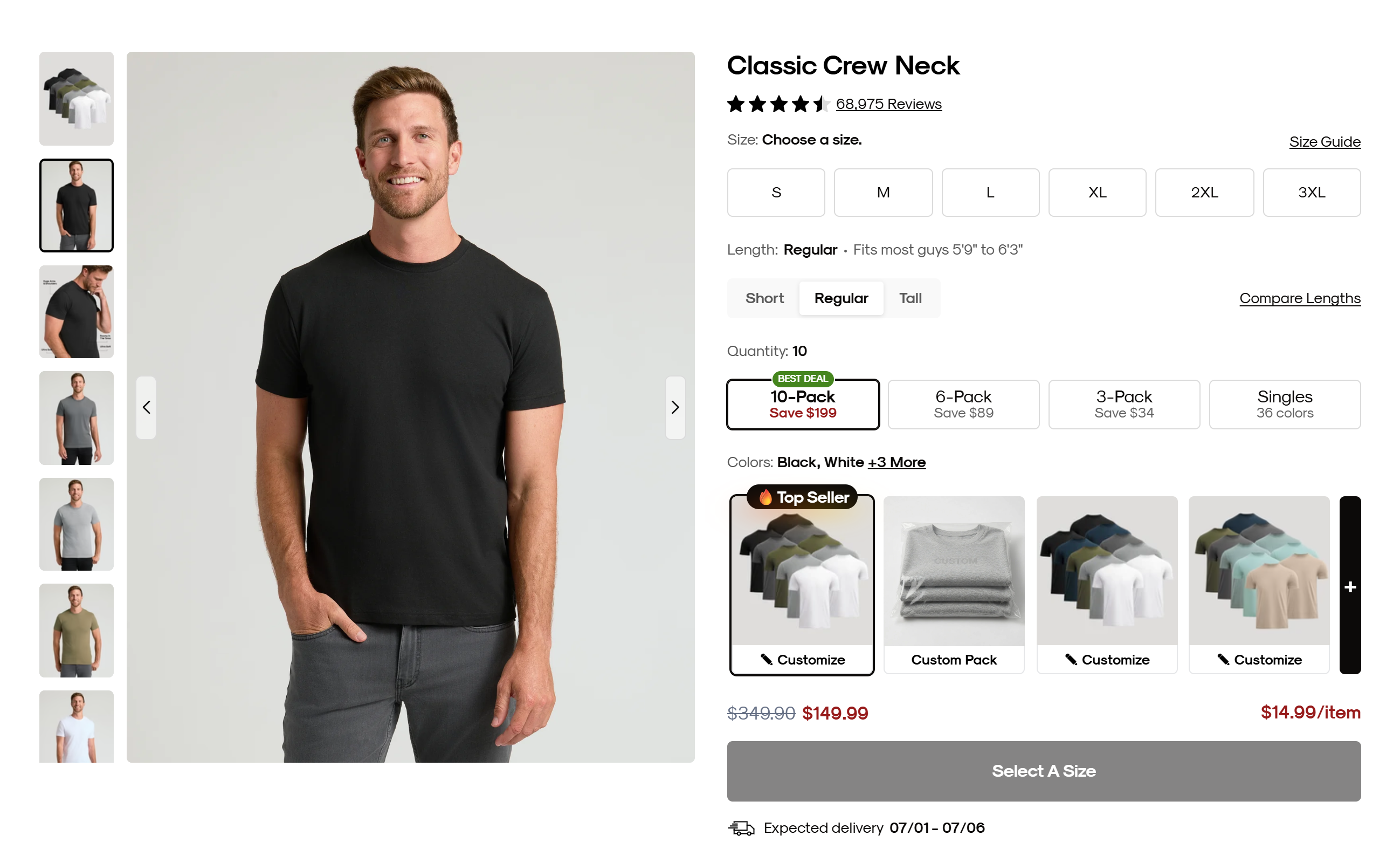
Buy bigger packs to unlock valuable discounts.
4.4 How to discount the right item instead of everything
The safest approach is often to discount the right item rather than every item in the bundle. Practical options include:
- Discount only the accessory when bought with the main product.
- Offer a lower-priced refill when added to the first order.
- Pair a high-margin item with a lower-margin anchor product.
- Use free or discounted samples instead of reducing core product prices.
- Apply small fixed-dollar savings instead of percentage discounts.
The checkpoint is bundle-level contribution margin. If the offer increases order size but weakens profit per order, it may not be worth scaling.
5. Where should bundle offers appear in the shopping journey?
Bundle placement should match customer readiness. An offer that performs well on a product page may not work at checkout. Therefore, Shopify merchants need to test each placement on their stores distinctly.
5.1 How should bundles be presented on product pages
On product pages, the main product must remain the focus. The related product bundles and add-ons should support the purchase decision, not compete with it.
Tips to optimize product page bundles:
- Place the offer near the Add to cart button or below product information.
- Use benefit-driven labels like “Complete your setup,” “Add compatible refills,” or “Build the routine” to explain why the products belong together.
- Limit bundles to 2-4 items, so they tend to be easier to evaluate than larger product combinations.
- Make compatibility obvious. If the add-on depends on size, model, shade, or variant, preselect the correct option where possible or provide a clear selector whenever possible.
5.2 When should you use cart, checkout, and post-purchase offers
Cart add-ons should be quick decisions. Focus on relevant products that require little research and clearly complement what's already in the cart.
Checkout offers should be even simpler. Do not introduce complex bundles that could make shoppers reconsider the whole purchase.
Post-purchase offers are suitable for accessories, refills, care products... These add-on items feel like a logical next step and do not disrupt the order just placed.
6. How to measure bundling performance
A successful bundle does more than increase order value. To understand its real impact, measure how the offer affects profitability, customer behavior, and overall purchase performance.
6.1 Which metrics to track
Track these metrics at the offer level, not just the store level:
- Average order value: Did orders exposed to the offer become larger?
- Attach rate: How often did customers add the paired item?
- Bundle conversion rate: What percentage of bundle viewers bought?
- Cart abandonment: Did the offer create friction?
- Bundle gross margin: Did the combined order remain profitable after price reductions and fulfillment costs?
- Cannibalization: Did the bundle replace full-price purchases?
Also monitor inventory impact. A bundle that drains a key component can create stockout issues and reduce future sales.
6.2 Common reasons bundle test fail
Test one major variable at a time. If you change multiple elements together, you will not know what actually influenced performance.
-
Weak product fit: Shoppers view the offer but rarely add it.
- Fix: Select a more obvious complement.
-
Over-discounting: Sales rise but margins fall.
- Fix: Discount only the add-on or lower the incentive.
-
Choice overload: Buyers hesitate due to too many products or options.
- Fix: Reduce items, variants, bundle rules.
-
Bad timing: The offer appears too late or too early.
- Fix: Move it to product page, cart, or post-purchase based on decision complexity.
-
Inventory constraints: One component limits the entire bundle.
- Fix: Swap the item or pause the offer.
When a bundle strategy from FBT consistently underperforms, remove it or redesign it. When it succeeds, expand it to additional placements such as collection pages, email campaigns, landing pages, or replenishment flows.
Conclusion
Frequently Bought Together is a useful source of insight, but it is not a strategy on its own. The strongest bundle programs are built around customer needs, supported by data, and refined through testing. Done well, bundles may become a better buying experience.
FAQs
1. How do you build bundles from frequently bought together data?
Start by finding products that are often purchased together. The package cross-sell bundles based on FBT with clear savings, fast add-to-cart, and a clear reason to buy them.
2. What is the difference between frequently bought together and a product bundle?
Frequently bought together is a recommendation pattern based on purchase behavior.
A product bundle is a defined offer that groups products together, usually with a price incentive or convenience benefit.
3. Should bundles apply a discount?
Usually yes, because a visible savings message helps customers understand the value of buying together. The discount does not have to be large, but it should feel meaningful.